
What Are the Top Grooved Acoustic Panel Types in 2026?

A Grooved Acoustic Panel can bring order to a noisy room while adding a clear architectural rhythm. In 2026, the best choice depends on more than appearance. Room use, panel construction, mounting method, and measured acoustic performance all matter. A meeting room with sharp speech reflections needs different treatment from a restaurant with constant background noise.

This guide explores leading grooved panel types, including veneered wood, laminate-faced boards, and felt-based options. It considers groove spacing, depth, backing materials, and how each detail can affect sound absorption and visual character. Small grooves can look subtle. Wider channels make a stronger statement. But the face pattern alone does not prove how well a panel performs; the full assembly and test data deserve attention.

There is no universal winner. A warm oak finish may suit a reception area, while durable laminate may make more sense in a busy corridor. Felt panels can offer softer colors and lighter handling, though their appearance may not fit every interior. A little uncertainty is useful here: product claims can be difficult to compare when test methods or installation details differ. Check technical sheets, fire and maintenance information, and independent acoustic ratings where available. Then match the panel to the room, not just the product photograph. This overview provides a practical starting point for comparing options and asking suppliers better questions.
What Are the Top Grooved Acoustic Panel Types in 2026?

What Grooved Acoustic Panels Are and How They Absorb Sound

Grooved acoustic panels have narrow channels cut into a firm surface, often with sound-absorbing material behind it. Common versions use wood-based boards, mineral-fibre cores, or other porous backing materials. The grooves may run vertically, horizontally, or in repeating patterns. They add visual texture, but their acoustic role depends on what sits behind them. A decorative grooved board without an absorptive layer may do little to reduce room echo.

Sound waves reach the panel and pass through its grooves or small openings. Inside, porous backing slows moving air; friction turns some sound energy into a small amount of heat. That helps reduce reflections, especially in speech-heavy rooms such as meeting spaces and classrooms. The result depends on groove width, backing depth, panel spacing, and installation. A sample panel can sound effective in a showroom yet perform differently across a large room. Low notes are harder to control. Deeper cavities may help, but no single panel suits every space. Check test data for the full assembly, not just the surface finish.

Materials and Construction Used in Grooved Acoustic Panels

Grooved Acoustic Panel Materials and Construction

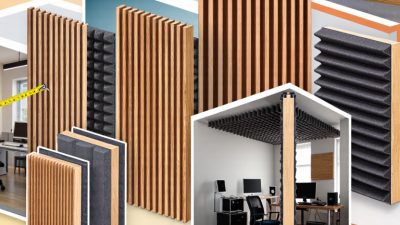
In 2026, grooved acoustic panels commonly combine a rigid face with an absorptive backing. The visible face is often medium-density fiberboard, or MDF, finished with paint, laminate, or wood veneer. Narrow grooves break up the surface and help sound reach the material behind it. Looks matter. But grooves alone do not guarantee strong absorption.

Many panels use a perforated or slotted back layer, with mineral wool or polyester fiber placed behind it. This construction lets sound pass through the face and lose energy in the porous core. Solid-wood faces offer a natural grain and can be durable, though their weight and cost may be higher. Felt-based options are lighter, but their acoustic behavior depends on density and mounting. Check the core. A decorative panel can look convincing and still absorb little if its backing cavity is omitted.

Performance depends on groove width, panel thickness, core density, and the air gap behind the assembly. A thin panel mounted directly on a hard wall may provide less low-frequency absorption than a deeper system. Installers should follow tested assembly details, not just the panel’s appearance. Small gaps matter. For busy rooms, also check cleanability, moisture limits, and fire-test documentation for the complete assembly. Specifications vary, so compare test conditions before choosing.

The Leading Grooved Acoustic Panel Types in 2026

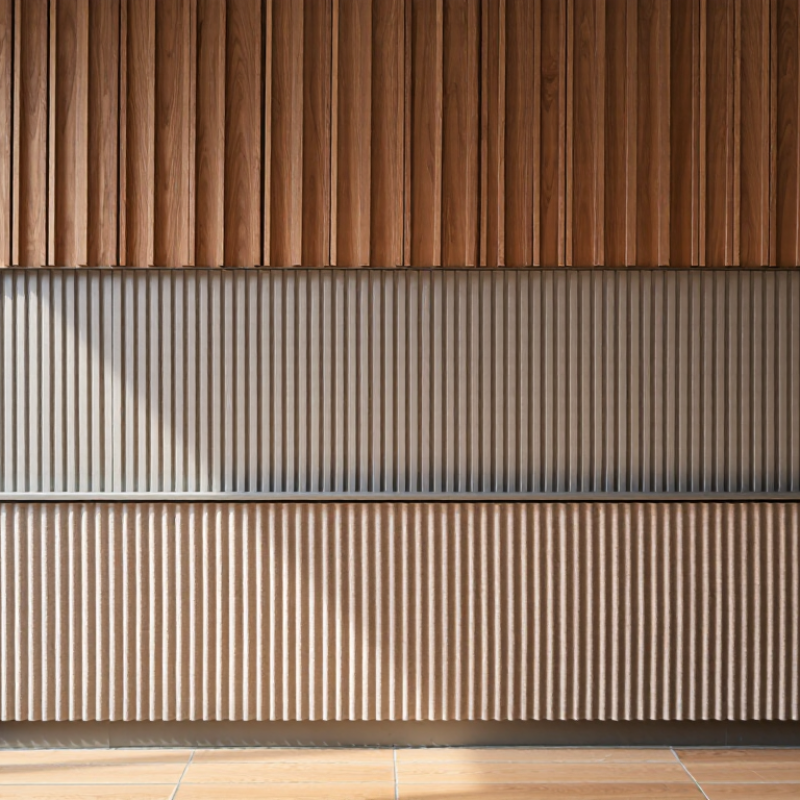
In 2026, the leading grooved acoustic panel types balance sound absorption, finish, and installation depth. Slotted timber panels, often backed with mineral wool, suit meeting rooms and restaurants where warm grain matters. Their narrow channels can catch dust, though. Grooved PET-felt panels are lighter and can add color to classrooms or offices. Perforated or routed wood-fiber panels offer a more uniform face, while fabric-wrapped grooved cores soften the look in studios and shared spaces. Not every room agrees.

Choose by measured performance, not groove pattern alone. ASTM C423 measures sound absorption; its Noise Reduction Coefficient averages results at 250, 500, 1,000, and 2,000 Hz. Ask for test results for the complete panel assembly, including its backing and mounting gap. A bare sample may perform differently on a wall. WHO Europe’s 2018 Environmental Noise Guidelines recommend road-traffic exposure below 53 dB Lden and 45 dB Lnight. These are outdoor health benchmarks, not panel ratings, but they underline why room acoustics deserve attention. Test before specifying. A deep groove can look dramatic yet absorb little if the backing is too thin. That is an easy detail to miss.

What Are the Top Grooved Acoustic Panel Types in 2026? - The Leading Grooved Acoustic Panel Types in 2026

Panel type Typical construction Common groove or face pattern Indicative sound absorption Common applications Key selection consideration
Grooved MDF panels Decorative medium-density fiberboard face, commonly installed over an absorptive backing and air cavity. Parallel slots or grooves; groove width, spacing, depth, and open area vary by design. Assembly-dependent; often moderate to high when paired with porous backing. Request test data for the complete wall or ceiling assembly. Offices, meeting rooms, classrooms, hospitality interiors, and corridors. Check veneer or finish durability, fire requirements, and whether the backing and cavity match the tested configuration.
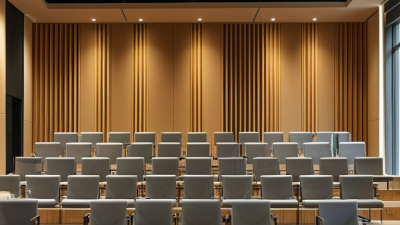
Grooved plywood or veneer-faced panels Plywood substrate with a wood veneer or decorative face; may be combined with acoustic fleece or mineral-fiber backing. Linear grooves, often arranged to emphasize the natural grain or create a repeating architectural rhythm. Varies with slot geometry, backing, and cavity depth; the wood face alone should not be treated as a guaranteed absorber. Auditoriums, libraries, boardrooms, restaurants, and public interiors. Suitable where a natural-wood appearance is important; verify veneer species, finish, emissions, and fire classification.
Micro-grooved wood panels Wood-based panel with fine, closely spaced grooves, typically used as a finish layer over an acoustic backing. Narrow grooves with a finer visual texture than conventional slotted panels. Performance depends on the effective open area and backing assembly; compare laboratory results rather than appearance alone. Contemporary offices, cultural spaces, classrooms, and feature walls. Fine grooves can be less visually prominent, but surface cleaning and finish maintenance should be considered.
Grooved PET felt panels Porous, nonwoven polyester-fiber panel with grooves formed in or cut into the face. Straight channels, sculpted grooves, or repeated relief patterns; some designs use layered felt. Generally absorptive as a porous material; results vary with thickness, mounting method, air gap, and test frequency. Workspaces, classrooms, studios, and interiors where a soft, lightweight finish is desired. Confirm recycled-content claims, cleanability, edge finish, and project-specific fire and indoor-air requirements.
Grooved gypsum panels Gypsum-based board with a routed, molded, or patterned face; acoustic performance usually relies on the full system design. Linear or geometric surface grooves, sometimes combined with perforations or a concealed absorptive layer. Highly assembly-dependent; a solid decorative face may reflect sound, while perforated or cavity-backed systems can absorb more. Ceilings and walls in commercial, educational, and public buildings. Review weight, support framing, joint details, impact resistance, and the tested acoustic build-up.
Grooved metal panels with acoustic backing Formed metal face with grooves or channels, generally paired with a perforated section and absorptive backing. Ribbed, linear, or corrugated profiles; perforations may be integrated or concealed. Absorption is primarily determined by perforations, backing, and cavity—not by the grooves alone. Transport facilities, sports venues, industrial interiors, and durable ceiling systems. Assess corrosion resistance, edge safety, cleanability, and suitability for the local environment.

Note: Acoustic performance is specific to the complete tested assembly, including panel thickness, groove or perforation geometry, backing, mounting method, and air cavity. Compare product test reports using the same measurement standard and installation conditions.

How Panel Types Differ in Acoustic and Design Performance

Grooved acoustic panels differ in more than appearance. Their core material, groove spacing, and backing all affect how they manage sound. MDF panels with a sound-absorbing layer behind them are common in offices and meeting rooms. Their regular channels create a tidy, linear look. They can help reduce reflections, though results depend on the full wall assembly and room conditions.

Solid-wood veneer panels bring visible grain and a warmer finish. They suit spaces where surface detail matters, but the veneer itself is not the main sound absorber. A properly specified backing and a small air cavity can influence performance more than the decorative face. Details matter. PET-based panels offer another option: they are often lighter and can introduce color, but their texture may feel less formal than wood. The effect is subtle.

Groove width and depth shape both shadow and sound response. Narrow, closely spaced grooves create a finer rhythm; wider channels look bolder and may expose more of the backing. No single profile works everywhere. I would check test data for the complete panel system, not just the face material, and consider furniture, ceiling height, and listening distance. A beautiful panel can still disappoint if the room echoes, or if the installation leaves gaps that were never part of the plan.

How to Match Grooved Panels to Rooms and Applications

What Are the Top Grooved Acoustic Panel Types in 2026?
How to Match Grooved Panels to Rooms and Applications

Choose grooved panels by room use, not appearance alone. Narrow, closely spaced grooves create a restrained linear look for offices and meeting rooms. Wider grooves can make a stronger visual feature in reception areas or restaurants. For speech-focused spaces, check the full panel specification: the backing, air gap, and installation often affect absorption as much as groove design. A panel that looks substantial may still do little for low-frequency noise.

In a conference room, prioritize clear speech and consider panels on reflective walls near participants. In a corridor, durable surfaces and easy cleaning may matter more than fine acoustic adjustment. Home theaters often need a planned mix of absorption and reflection; covering every wall can make dialogue sound unnaturally flat. Small details count. Confirm that the panel material suits the room’s moisture and fire-safety requirements, and compare tested performance data for the complete assembly. If possible, review a sample in the actual lighting. It can be hard to judge color and groove depth from a screen, and one sample will not reveal how a large wall feels. A mock-up is useful, though it may not reflect the final room perfectly.

Top Grooved Acoustic Panel Types in 2026

Indicative Noise Reduction Coefficient (NRC) ranges show how panel construction and backing can affect sound absorption.

Match the assembly to the room: absorber-backed panels are often suited to offices and classrooms, while direct-mounted panels may work where absorption needs are modest. NRC values are indicative, not guaranteed; performance varies with the tested product, mounting, cavity depth, and installation. Check product-specific ASTM C423 test data.

Write your message here and send it to us.