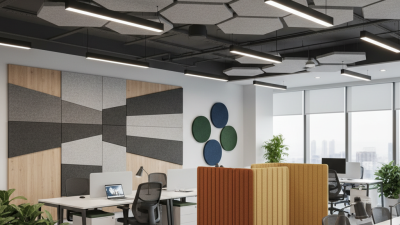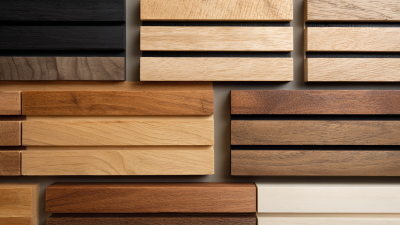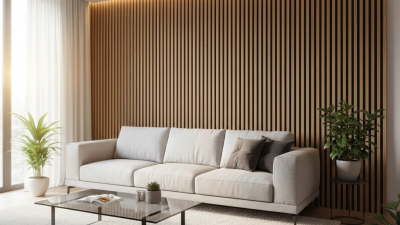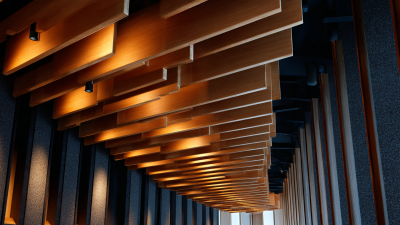

In 2026, global buyers are looking beyond decorative wall treatments. They want measurable acoustic performance, stable materials, and dependable international supply. Fluted Acoustic Panels combine linear grooves with sound-absorbing cores, creating warmer walls without making rooms feel visually heavy. They suit offices, hotels, studios, restaurants, classrooms, and home media rooms.
Market evidence supports this interest. MarketsandMarkets reports that the global acoustic panels market could grow from approximately USD 10 billion in 2023 to nearly USD 14 billion by 2028. Grand View Research also identifies continued demand for sustainable and design-led acoustic products through 2030. However, these reports usually group several panel types together. They do not measure every Fluted Acoustic Panels segment separately. That limitation matters.
Sound expert Julian Treasure said, “We are all affected by sound, but most of us don’t realize it.” His point remains practical. A panel should reduce unwanted reflections, not simply look attractive in product photography. Buyers should compare Noise Reduction Coefficient values, reverberation tests, fire classifications, formaldehyde emissions, backing density, and installation details. ISO 354 testing can provide useful absorption evidence. EN 13501-1 classifications may help assess fire performance across European projects.
A glossy slat is not automatically effective. Some products hide thin cores behind beautiful surfaces. Others perform well but disappoint during installation. This guide evaluates the 2026 best Fluted Acoustic Panels through both perspectives. Performance matters. So do honesty, maintenance, shipping protection, and regional compliance. No ranking is perfect, especially when suppliers publish incomplete test data.
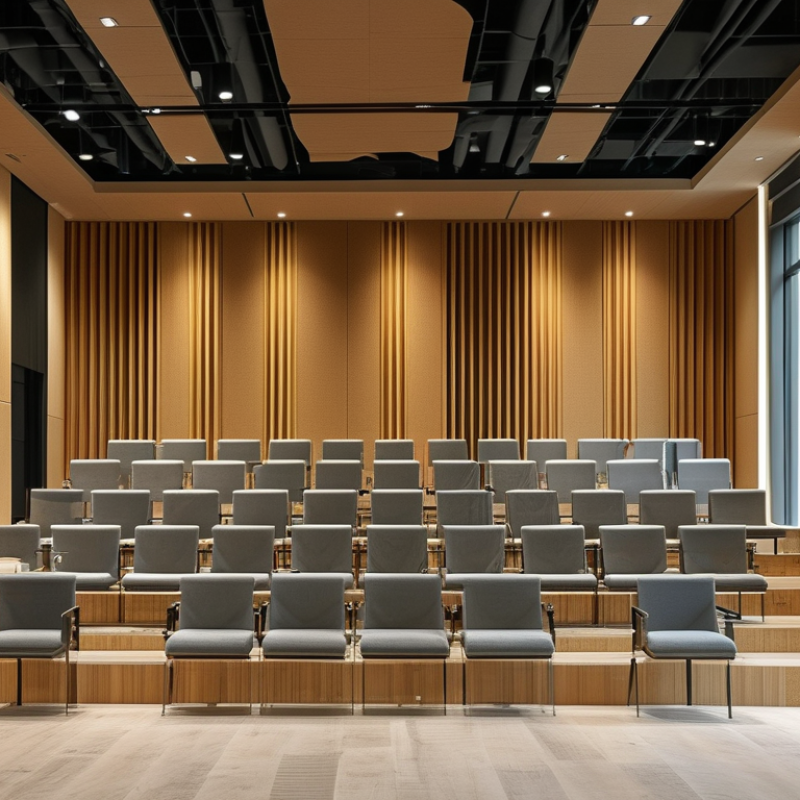
Fluted acoustic panels combine narrow grooves, solid slats, and an acoustic backing layer. The slats usually sit over recycled polyester felt or another porous material. This structure changes how sound moves across a wall. Smooth surfaces reflect sound directly, while the flutes interrupt and scatter those reflections.
The backing absorbs part of the sound energy, especially in speech and everyday room noise. The grooves also reduce harsh echoes between parallel walls. However, these panels do not block sound like a dense wall or sealed door. They improve room comfort rather than create full sound isolation. A meeting room may sound clearer, while voices from the next room remain audible.
Panel spacing, wall coverage, ceiling height, and furniture all affect performance. Covering only a small decorative strip may produce limited acoustic improvement. A practical assessment should identify hard surfaces, reverberation, and the main noise source before selecting a panel. In a large office, panels behind speakers and across the rear wall can support speech clarity. In a home studio, thicker backing and wider coverage may be more useful.
Details matter.
Buyers should check fire performance, moisture resistance, mounting strength, and tested acoustic data. Product claims can be confusing when tests use different methods. This deserves careful comparison. Fluted panels look warm and architectural, but appearance alone cannot guarantee effective absorption. Even experienced installers may need to adjust placement after hearing the finished room. That small correction is not a failure; rooms rarely behave exactly like drawings.
Fluted acoustic panels use repeated grooves to shape sound reflections, while a porous or absorptive backing converts part of the sound energy into a small amount of heat. The chart shows the wavelength of sound at common acoustic test frequencies, calculated using a sound speed of 343 metres per second in air at 20°C.
Lower-frequency sound has longer wavelengths and generally requires deeper profiles, larger air gaps, or thicker backing materials for effective absorption. Actual panel performance depends on flute depth, spacing, core material, mounting method, air cavity, and laboratory test results such as ISO 354 or ASTM C423.
For 2026 global buyers, fluted acoustic panels should be judged by tested performance, not decorative depth alone. Review the Noise Reduction Coefficient (NRC), but check how it was measured. NRC normally averages absorption at 250, 500, 1000, and 2000 Hz. Low-frequency performance may remain weak.
Numbers need context. Look for laboratory reports using recognized methods, such as ASTM C423 or ISO 354. A report should identify the panel size, mounting method, air gap, and tested frequency range. Without these details, two similar ratings may describe very different installations. Installation matters. A 50 mm air cavity can improve absorption, especially in speech-focused rooms. Fluted faces may scatter sound, but scattering is not the same as absorption.
Material safety also deserves careful review. Ask for fire classification, formaldehyde or VOC emission data, moisture resistance, and cleaning guidance suitable for the destination market. Test documents should be current and traceable to an independent laboratory. In project inspections, uneven backing, open joints, and poorly sealed edges often reduce real-world results. Real rooms differ. A product can perform well in a reverberation chamber yet disappoint in a glass-walled office. This is where buyers should remain cautious. Compare laboratory data with room calculations, ceiling height, furniture, and expected occupancy. Acoustic comfort depends on the complete system, not one attractive panel.
Fluted acoustic panels suit global projects because they balance sound control, texture, and quick installation. The main types include PET-felt flutes, wood slat panels, perforated MDF, and mineral-wool systems. PET felt is lightweight and moisture-tolerant, making it practical for offices, schools, and transport interiors. Wood slat panels create warmer rooms but need careful backing and joint detailing.
Performance depends on the entire assembly. ASTM C423 reports sound absorption through the Noise Reduction Coefficient, or NRC, on a scale from 0 to 1. ISO 354 uses reverberation-room testing for comparable absorption results. Buyers should request test reports, mounting conditions, panel thickness, and spacing. A panel tested with a 50-millimeter cavity may perform differently against a solid wall. Small details matter.
The World Health Organization recommends below 40 dB Lnight outdoors to protect sleep in residential settings, according to its Environmental Noise Guidelines for the European Region. Panels cannot achieve that target alone. They mainly reduce reflections, not traffic or machinery entering through windows. Fluted PET panels work well where impact resistance matters. Wood systems suit hospitality spaces with visible natural finishes. Mineral-wool panels often deliver stronger absorption, but they require protected edges and stricter fire documentation. The awkward truth: many projects choose by appearance first. That choice can fail when reverberation remains high. Performance should be checked in the finished room, not only on a sample board.
| Panel Type | Typical Construction | Typical Thickness | Typical Acoustic Performance | Best Applications | Installation Method | Fire and Compliance Considerations | Global Buyer Considerations |
|---|---|---|---|---|---|---|---|
| PET Felt Fluted Panels | Thermally formed or CNC-cut polyester felt, commonly manufactured with recycled PET content. | 9–25 mm panel; deeper flutes or backing layers may increase total build-up. | Typical NRC: 0.35–0.85 when installed with an air gap or absorptive backing; performance depends strongly on thickness and spacing. | Open offices, classrooms, meeting rooms, hospitality interiors and residential workspaces. | Adhesive, concealed clips, screws or direct fixing over battens; lightweight and suitable for partial wall coverage. | Check the exact EN 13501-1, ASTM E84 or equivalent classification; untreated polyester products are not automatically fire-rated. | Low shipping weight, broad color selection and easy cutting are useful for international projects; confirm color consistency between production batches. |
| Wood Slat Fluted Panels with Acoustic Backing | Solid or veneered wood slats fixed to a felt, mineral-fiber or other sound-absorbing backing layer. | Approximately 20–45 mm, excluding additional battens or wall cavities. | Typical NRC: 0.45–0.90 with an absorptive backing and suitable air cavity; open area and slat spacing are critical. | Feature walls, executive offices, restaurants, hotels, auditoriums and high-end residential interiors. | Mechanical fixing through the backing, concealed clips or screw-mounted timber battens. | Wood species, coating and backing must be assessed together; request fire reaction, smoke and formaldehyde documentation for regulated projects. | Confirm legal timber sourcing, moisture conditioning, veneer matching, protective packaging and allowable dimensional tolerances. |
| MDF or Veneered MDF Fluted Panels | Routed medium-density fibreboard with painted, laminated, melamine or natural-wood veneer surfaces; often paired with a backing layer. | 12–30 mm panel; complete acoustic assemblies are usually thicker. | Typical NRC: 0.20–0.75 depending on groove geometry, perforation, backing and air gap. | Retail interiors, corridors, offices, residential feature walls and decorative ceiling applications. | Screws, cleats, clips or adhesive systems on a flat substrate; professional handling helps prevent edge damage. | Specify low-emitting board and confirm formaldehyde class, surface fire rating and local interior-finish requirements. | Usually offers consistent machining and lower cost than solid wood; protect panels from high humidity and direct water exposure. |
| Perforated or Slotted Wood Acoustic Panels | Wood-based panel with repeated perforations or slots over mineral-fiber, polyester or fibrous acoustic backing. | 15–40 mm, with total thickness increasing when mounted on a frame or cavity. | Typical NRC: 0.45–0.90; tuned systems can improve targeted mid- and high-frequency absorption. | Music rooms, conference rooms, lecture spaces, cultural buildings and large commercial interiors. | Suspended ceiling grids, exposed battens, mechanical clips or screw-fixed wall systems. | Use assembly-level test evidence because the panel, backing and cavity jointly affect fire and acoustic results. | Suitable where design and speech intelligibility are both priorities; allow for longer lead times when perforation patterns are customized. |
| Mineral-Fiber Fluted or Ribbed Panels | Mineral-fiber or glass-mineral substrate shaped with ribs, grooves or wrapped decorative surfaces. | 15–40 mm, depending on density and edge profile. | Typical NRC: 0.65–1.00 for high-absorption configurations, subject to laboratory testing. | Large offices, schools, call centers, cinemas, transport facilities and reverberant public spaces. | Suspension systems, T-grid integration, perimeter framing or mechanical wall clips. | Often selected for strong fire and acoustic potential, but the actual classification must be verified for the complete product assembly. | Consider edge protection, packaging against breakage, installation dust control and availability of replacement panels. |
| Bamboo or Agricultural-Fiber Fluted Panels | Engineered bamboo, straw, bagasse or other plant-fiber composite formed into a decorative grooved panel, usually with an acoustic backing. | 12–30 mm panel; backing and cavity can add 20–75 mm to the installation depth. | Typical NRC: 0.30–0.80 when combined with an absorptive backing and air gap. | Sustainable design projects, hospitality interiors, offices, education buildings and residential applications. | Mechanical clips, screws or battens; acclimatization may be required before installation. | Verify moisture resistance, fire classification, adhesive chemistry and emissions documentation for the selected composite. | Ask for recycled or rapidly renewable content evidence, chain-of-custody information and climate-specific storage guidance. |
| PVC or Polymer Fluted Panels | Extruded or molded polymer profiles, sometimes combined with a separate acoustic fleece or porous backing. | 10–30 mm profile; acoustic performance is usually higher with an absorptive backing and cavity. | Typical NRC: 0.15–0.60; decorative hollow profiles without porous backing generally absorb less sound. | Retail, utility areas, humid interiors and projects requiring wipe-clean surfaces. | Interlocking profiles, clips, screws or adhesive depending on substrate and product design. | Confirm smoke, flame spread, halogen content, UV stability and suitability for occupied interiors. | Useful in humid regions, but check thermal expansion, odor, recyclability and local restrictions on polymer-based finishes. |
| Ceiling-Mounted Fluted Acoustic Baffles | Vertical or horizontal fluted absorbers suspended below the ceiling to increase exposed acoustic surface area. | 25–50 mm absorber thickness; suspension height commonly 150–600 mm. | Typical sound absorption coefficient: 0.60–1.00 at selected mid and high frequencies; room results depend on spacing and coverage. | High-ceiling offices, cafeterias, sports facilities, airports, atriums and open-plan learning spaces. | Aircraft cable, threaded rod, ceiling grid carriers or proprietary suspension hardware. | Coordinate structural loads, seismic requirements, sprinkler clearances and fire classifications before installation. | Confirm ceiling height, wind movement, access for maintenance and shipping dimensions for long or oversized elements. |
For global buyers, comparing fluted acoustic panels starts with material, not appearance. PET felt is lightweight, moisture-tolerant, and often contains recycled fibers. Wood veneer adds warmth, but humidity can cause movement if backing and sealing are poor. Mineral or composite cores may improve sound absorption, yet they can increase weight and shipping complexity. Ask for tested acoustic data, including NRC or equivalent ratings, test standards, and fire classification. Do not trust a single number. Room volume, wall coverage, and low-frequency noise change real performance.
Design affects both acoustics and maintenance. Narrow flutes create a sharper visual rhythm, while wider grooves collect less dust and are easier to clean. Check edge finishing, color consistency, and panel alignment under daylight. Standard sizes can reduce waste and replacement costs. Custom dimensions may suit columns or curved walls, but they need accurate site measurements. I have seen attractive layouts fail because electrical outlets were measured too late. That mistake is avoidable, though not always.
Tips: Request a material sample, technical datasheet, fire documents, and installation drawings before ordering. Compare adhesive, clip, and furring-channel systems by substrate condition, reversibility, labor, and repair access. Confirm tolerances, packaging protection, moisture limits, and replacement availability. For international projects, verify customs documents and local code acceptance with a qualified professional. A cheaper panel can become expensive after delays. Leave room for reconsideration.
Global Purchasing Guide: Certifications, Suppliers, Costs, and Delivery
Fluted acoustic panels are usually made with PET felt, wood veneer, or mineral fiber cores. MarketsandMarkets valued the global acoustic insulation market at about USD 14 billion in 2023. It forecasts approximately 5.6% annual growth through 2028. Grand View Research also identifies commercial interiors as a major demand area. These figures support steady sourcing, but they do not guarantee stable prices.
MarketsandMarkets valued the global acoustic insulation market at about USD 14 billion in 2023.
Ask suppliers for ISO 354 absorption results and ASTM C423 test reports. For European projects, request EN 13501-1 fire classification. Check recycled content, formaldehyde emissions, and production traceability. A certificate alone is not enough. Review the test laboratory, sample thickness, mounting method, and report date. I would not compare an NRC value from one mounting system with another. That mistake remains common.
Typical export pricing ranges from USD 25 to USD 90 per square meter, excluding freight and installation. Costs change with groove depth, backing density, veneer, packaging, and order volume.
A practical supplier audit should include a physical sample, factory video, production capacity, and packaging photos. Ask for a pre-shipment inspection. Standard orders may need three to eight weeks for production, plus ocean transit. Air freight is faster, but often damages the budget. Delivery terms, customs paperwork, and replacement panels deserve attention before payment.
Something is still often missed.
Salvage planning.