
How to Choose the Best Grooved Acoustic Panel

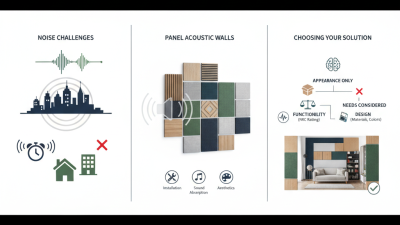
A Grooved Acoustic Panel can change how a room sounds and how its walls feel. Yet choosing one by appearance alone is a common mistake. A panel that looks elegant in a showroom may perform differently in a busy office, dining area, or home studio. Sound behavior depends on the room, the wall assembly, and the materials behind the grooves.

Start by identifying the problem: harsh echoes, speech that feels unclear, or general noise buildup. Then compare panel composition, groove depth, backing, dimensions, and published acoustic test data. Look for ratings such as NRC, but treat them as one reference, not a guarantee for every installation. A small meeting room with hard glass and tile needs a different approach from a carpeted bedroom. Check cleaning needs, fire-performance documentation, installation method, and whether the finish suits the room’s lighting and daily use. Ask suppliers for product specifications and test details, rather than relying on broad claims. Small details matter. Measure before ordering.

There is no perfect panel. Even a well-chosen product may disappoint if coverage is too limited or placement ignores the main reflection points. This guide explains how to weigh performance, design, cost, and practical constraints before buying. It also leaves room for a useful doubt: acoustic products are often described with confident numbers, but real rooms are less tidy than test labs. Choose with evidence, and verify the fit for your space.
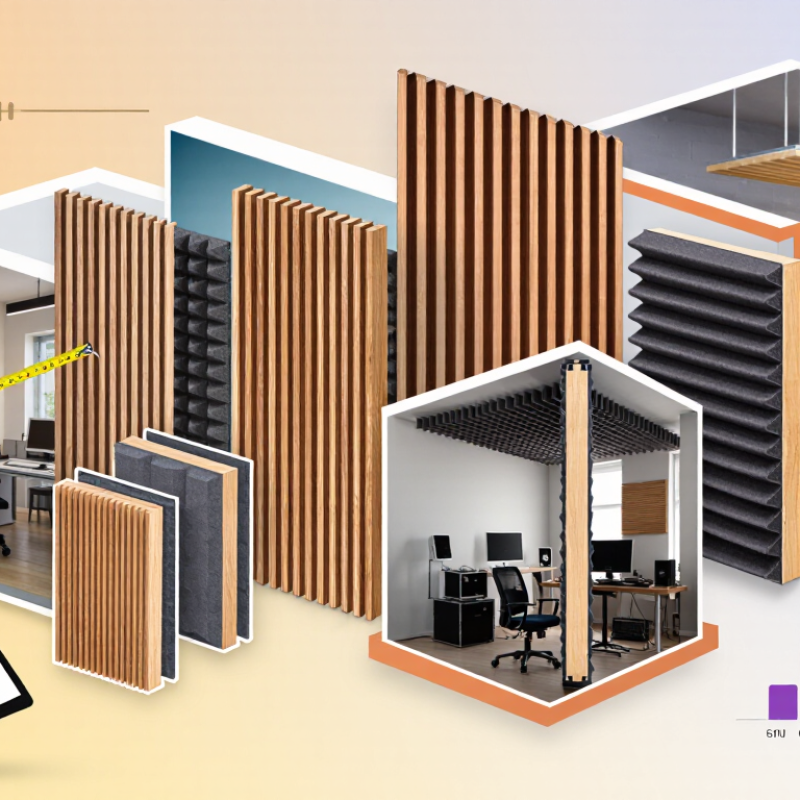
How to Choose the Best Grooved Acoustic Panel

What Grooved Acoustic Panels Are and How They Work

Grooved acoustic panels have narrow channels cut or formed across a solid-looking face. Beneath that surface, a porous core or absorbent backing helps reduce reflected sound. When sound reaches the panel, some energy enters the grooves and backing, where it is converted into a small amount of heat through friction. The grooves also scatter sound, though their effect depends on depth, spacing, and room conditions. They do not block sound like a sealed, heavy wall. That distinction matters.

In a room with hard floors and bare walls, speech may echo or feel sharp. Panels can soften those reflections, especially when placed near common reflection points. A careful installer checks the wall structure, panel weight, and required air gap before mounting. The backing and gap can affect absorption, so two panels with similar faces may perform differently. Check independent test data when available, and compare results across relevant frequencies. Numbers help, but the room still matters. Grooves are not magic. I have found that choosing their spacing by appearance alone is a weak shortcut; a small test area or room measurement can reveal what actually works.

How Grooved Acoustic Panels Work: Sound Wavelength by Frequency

Sound wavelength is calculated using λ = 343 ÷ frequency, assuming a sound speed of 343 m/s at about 20°C. Grooves can interact differently with sound across frequencies, while a panel’s actual absorption also depends on its groove design, porous backing, air gap, and installation.

How to Assess Your Room’s Acoustic Needs

How to Choose the Best Grooved Acoustic Panel

How to Assess Your Room’s Acoustic Needs

Before choosing grooved acoustic panels, listen to the room during normal use. Speak from your usual seat, then clap once and notice any sharp, lingering echo. A phone recording can help compare changes, though it is not a calibrated measurement. Note the room’s size, ceiling height, windows, bare floors, and large furniture. These details affect how sound reflects.

Tips: Test at different seats. Record what you hear. A clap test is useful, but limited.

Pay attention to the problem you want to solve. If voices sound harsh or blur together, reflections from walls or ceilings may be a factor. Grooved panels can reduce some reflected sound, but they will not fix every acoustic issue. Deep bass buildup often needs different treatment. I would avoid covering every surface based on one quick test; that can make a room feel unnaturally dull. Try a small area first, then listen again under similar conditions. Also consider where people sit, where speakers point, and whether the room needs to support conversation, music, or both. A room may look balanced and still sound tiring. Trust careful listening, and revise the plan if the result feels wrong.

How Groove Design and Panel Materials Affect Performance

Groove design changes how a panel interacts with sound, but deeper grooves do not automatically mean better absorption. Narrow, closely spaced channels can scatter reflections across a wall, while groove width and spacing influence which frequencies are affected. The backing matters just as much. A porous core, such as mineral wool or PET fiber, can absorb sound as air moves through it; a sealed air gap may also improve lower-frequency absorption. Small details matter.

Compare laboratory reports, not appearance alone. ASTM C423 reports absorption coefficients by frequency and an NRC value, averaged from 250, 500, 1,000, and 2,000 Hz. That single number can hide weak low-frequency results, so check the frequency-by-frequency data. ISO 354 describes reverberation-room measurement of sound absorption. Ask whether the tested assembly matches your planned installation, including its backing, cavity, and mounting method. Otherwise, the reported performance may not reflect the finished room. One limitation: lab results rarely capture every room’s furnishings and layout.

Tips: Match the panel’s tested frequency performance to the room’s problem. For speech echo, inspect mid-frequency results; for bass buildup, seek low-frequency data and consider an air gap. Don’t choose by groove depth alone.

How to Choose the Best Grooved Acoustic Panel - How Groove Design and Panel Materials Affect Performance
Panel Design Typical Materials and Construction Acoustic Performance Durability and Maintenance Best Suited For
Fine, closely spaced grooves Usually a routed wood-fiber or MDF face over an acoustic fleece and an absorptive backing. Grooves expose more of the backing to sound. Absorption is mainly determined by the backing, panel thickness, and air gap; the groove pattern alone does not establish an absorption rating. Wood-based faces are suitable for interior use. Protect edges from moisture and clean with a soft, dry cloth. Offices, meeting rooms, and interiors where a subtle linear finish is preferred.
Wide or deep grooves Commonly routed MDF or wood-fiber panels, sometimes installed over porous insulation. Deeper openings can reveal more of the absorber and create visual relief. Low-frequency performance still depends strongly on the full assembly, including backing depth and cavity. Deep profiles can collect dust more readily. Check that the finish and edges are appropriate for the room’s humidity. Large wall areas, feature walls, and spaces needing a more pronounced architectural pattern.
Grooves with a porous backing and air cavity Perforated or grooved face combined with acoustic fleece or porous insulation, mounted with a gap behind the panel. The porous layer dissipates sound energy. A deeper backing or air cavity can improve lower-frequency absorption compared with a thin panel mounted directly on a wall, subject to the tested configuration. Keep the backing protected from dust and damage. Use materials suited to the building’s fire and indoor-air-quality requirements. Rooms with persistent reverberation, such as classrooms, studios, and conference rooms.
Grooved PET felt Needle-punched or molded polyester felt with grooves formed in the face; some products use recycled polyester content. Porous felt can absorb sound, particularly at mid and high frequencies. Results vary with felt thickness, density, mounting, and any air gap. Generally lightweight and easy to handle. Cleaning methods depend on the product; avoid assuming that every felt panel is washable. Lightweight wall treatments, collaborative spaces, and projects where a soft, non-wood finish is wanted.
Decorative grooves on a solid, unbacked panel Solid wood, MDF, or another rigid panel with a routed surface and no porous absorber behind it. Primarily reflective. Grooves may alter surface scattering, but a solid panel should not be assumed to provide substantial sound absorption. Often straightforward to wipe clean; finish and moisture resistance depend on the face material and coating. Decorative applications where visual texture is the priority and absorption is provided elsewhere.
Grooved panel with mineral-wool backing Rigid grooved face over mineral-wool insulation, typically separated by an acoustic fabric or fleece layer. Can provide useful broadband absorption when designed as a complete system. Performance depends on the panel, backing thickness, cavity, and installation details. Specify suitable facings and edge protection. Follow the manufacturer’s installation and fire-safety documentation. Commercial interiors and other projects requiring a documented acoustic assembly.
Selection note: Compare tested absorption data for the complete panel assembly, such as an applicable laboratory test report, rather than relying on groove appearance or material name alone. NRC is a single-number rating and does not describe performance at every frequency. Grooved acoustic panels reduce reflected sound within a room; they are not, by themselves, soundproofing systems.

How to Compare Ratings, Durability, and Installation Requirements

How to Choose the Best Grooved Acoustic Panel
How to Compare Ratings, Durability, and Installation Requirements

Compare tested ratings, not appearance alone. ASTM C423 defines the laboratory method used to measure sound absorption; the NRC summarizes absorption at 250, 500, 1,000, and 2,000 Hz. A higher NRC can help, but it does not guarantee the same result in every room. Grooves, backing, air gaps, and mounting surfaces all affect performance. For context, ANSI/ASA S12.60 sets a 0.6-second reverberation-time limit for many small classroom spaces. That makes room size and intended use important when judging a panel rating.

Tips: Ask for the ASTM C423 report and confirm its mounting conditions. Check the tested assembly, not just the panel face.

Durability and installation matter just as much. In busy corridors, inspect the finish for scratch resistance and ask how it handles routine cleaning or humidity. For fire performance, request applicable ASTM E84 test documentation and confirm the project’s specification requirements. Before ordering, check panel weight, substrate, fixing method, edge clearances, and whether the wall can support the load. A small air gap may improve absorption, yet it also changes the installation depth. It is easy to overvalue a single rating; I would compare the test setup with the actual room before deciding.

How to Match a Panel to Your Room and Budget

How to Choose the Best Grooved Acoustic Panel

How to Match a Panel to Your Room and Budget

Match the panel to the room’s main problem, not just its appearance. A bright, echoing dining room may need treatment near hard walls, while a home office may benefit from panels behind or beside the desk. Start with the room. Measure the wall area and note windows, doors, and furniture before comparing sizes. Check published acoustic test data, such as absorption ratings, and confirm how the panels were tested. Results can vary with installation and room conditions.

Tips: Measure twice. Sketch the wall and mark likely panel locations. Compare the cost of panels, mounting hardware, and installation, not just the price per piece. If your budget is tight, treat the most reflective areas first, then reassess the sound before buying more.

Groove spacing, panel depth, backing, and coverage all affect the final look and performance. Ask whether the panel can be cut cleanly around outlets or trimmed to fit your wall. For a small room, a full-wall treatment may feel visually heavy; a few carefully placed sections might be enough. Still, estimates are imperfect. If possible, test a sample or temporary layout, because photos rarely show how a finish looks in your own light. Don’t expect wall panels alone to solve every low-frequency problem.

Write your message here and send it to us.