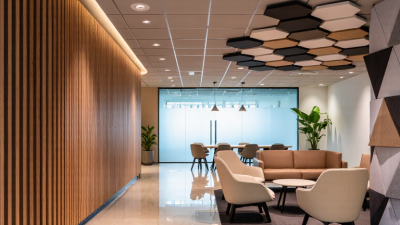
Why Choose Black Acoustic Wall Panels for Your Space?
Why Choose Black Acoustic Wall Panels for Your Space?
Sound shapes how a room feels, functions, and performs. In a busy office, hard surfaces can turn conversations into a tiring blur. In a home theater, echoes can soften dialogue and weaken musical detail. Black Acoustic Wall Panels offer a practical way to control reflections while adding a calm, architectural character.
Sound expert Julian Treasure observes, “The human voice is the instrument we all play.” His words highlight an important point: acoustic design affects communication, not only recording quality. Properly selected panels can reduce reverberation, improve speech clarity, and make meetings feel less exhausting. Their dark finish may also create visual depth behind a desk, screen, or listening area. Small details matter. Panel thickness, spacing, wall coverage, and placement influence results.
However, these panels are not a magic solution. They cannot block every outside noise, and thin decorative products may provide limited low-frequency control. That part is often overlooked. A reliable choice should include published absorption data, suitable fire-performance documentation, and clear installation guidance. Independent testing is valuable when available. In real projects, I would also check lighting, dust visibility, and how the black surface interacts with existing furniture.
Used thoughtfully, Black Acoustic Wall Panels can combine measurable acoustic improvement with a strong visual identity. The best result is rarely the darkest room. It is a space where voices remain clear, music feels balanced, and people can stay comfortable longer.
What Are Black Acoustic Wall Panels?
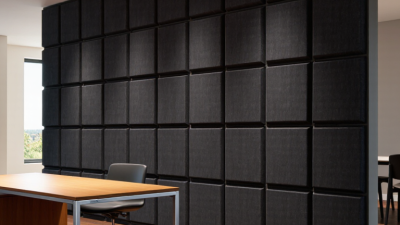
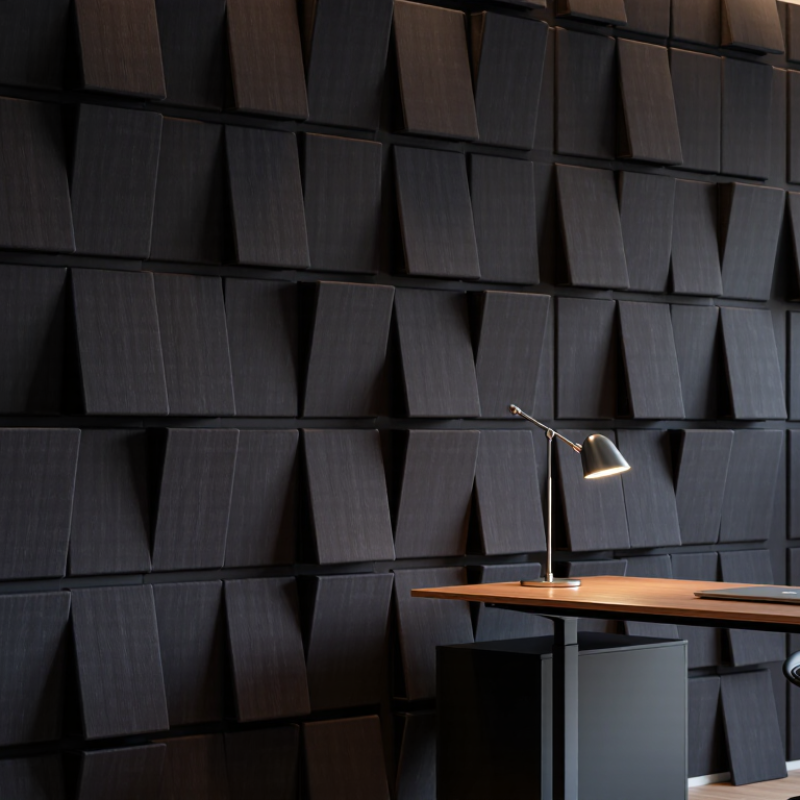
Black acoustic wall panels are interior surfaces designed to reduce reflected sound. They commonly combine a porous core with a dark, protective finish. Some use recycled polyester felt. Others pair acoustic felt with grooved wood strips. The visible black face absorbs part of the sound energy that would otherwise bounce across hard walls.
It is not a soundproof barrier. That distinction matters.
In a meeting room, bare glass, plaster, and concrete can create sharp echoes. A black panel softens these reflections, making speech easier to follow. It also gives the room a calm, architectural appearance. Panel performance depends on thickness, spacing, coverage, and mounting method. A thin panel placed behind furniture may help, but it cannot correct every acoustic problem. Low-frequency noise often needs deeper treatment or ceiling solutions.
Before choosing one, assess the room’s use, surfaces, and noise sources. Check published absorption data, fire classification, moisture limits, and cleaning guidance. Ratings can vary between products and installation systems. In practice, full-wall coverage is not always necessary. Targeted placement near reflection points may deliver better value. Yet visual preference can influence placement more than acoustic logic. That is worth questioning. A small test section, with a recorded voice and an empty-room comparison, can reveal whether the panel creates meaningful improvement.
How Do Black Acoustic Wall Panels Improve Room Acoustics?
Black acoustic wall panels can improve room acoustics by reducing reflected sound. Their porous cores absorb part of the sound energy instead of sending it back across the room. This helps control reverberation, harsh echoes, and distracting speech reflections.
In a meeting room, clearer voices may reduce repeated questions. In a home studio, reduced wall bounce can make recordings sound more controlled. Black surfaces also create a visually calm background, especially behind screens or equipment. However, color does not create acoustic performance. Panel thickness, density, spacing, and coverage matter more.
A useful installation detail is leaving a small air gap behind each panel. This can improve low-frequency absorption, although results vary by wall construction. Panels placed at first-reflection points often provide noticeable improvement. These are the areas where sound travels directly from speakers toward listeners. Corners may also need bass treatment when low tones remain heavy.
I have found that covering only one wall can leave the room sounding uneven. It may feel quieter near the treated surface but still lively elsewhere. That limitation deserves attention. Measuring reverberation before and after installation gives more reliable evidence than judging by appearance alone. Furniture, curtains, and flooring also influence the final result. Good acoustic planning treats the whole room, not just its darkest wall.
Which Materials and Designs Are Available?
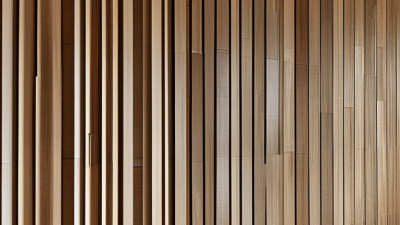
Black acoustic wall panels can make a room feel quieter, warmer, and visually more deliberate. Their performance depends on material, thickness, spacing, and installation. That detail matters. PET felt panels are lightweight, moisture-tolerant, and available in smooth or molded forms. Many contain recycled fibers, but recycled content should be verified through product documentation. Fabric-wrapped panels offer softer texture and broad color options, while mineral-fiber cores can provide strong sound absorption when properly mounted. Wood slat panels combine a real or decorative veneer with an acoustic backing.
Design choice changes both sound behavior and atmosphere. Slatted surfaces scatter some reflections and suit offices, studios, dining areas, and media rooms. Geometric felt tiles create patterns without adding visual heaviness. Perforated panels can support absorption while keeping a cleaner, architectural appearance. Ceiling baffles and suspended shapes help control noise in rooms with hard floors and tall ceilings. They are not wall panels, but they can complete the acoustic plan. Leave some surfaces reflective. Too much absorption may make speech sound unnaturally dry.
Before choosing black, inspect samples beside the room’s actual lighting. Matte finishes hide glare, yet they may reveal dust and pale fibers more easily. In practice, a near-black panel often feels easier to maintain than a perfectly dark one. This is a small compromise. Ask for tested absorption data, fire classification, cleaning guidance, and mounting instructions. Independent test reports are more dependable than broad marketing claims. A careful installer should check wall condition, panel alignment, edge details, and access to electrical equipment. Black can be dramatic. It should still serve the room.
Where Can Black Acoustic Wall Panels Be Used?
Black acoustic wall panels can shape the atmosphere of many interior spaces. Their dark finish adds visual depth, while their porous core helps reduce reflected sound. They work well in home theaters, music rooms, podcast studios, and gaming spaces. Speech becomes clearer. The room feels calmer.
Offices can use them behind meeting tables, reception desks, or shared workstations. In these areas, panels help soften keyboard noise and overlapping conversations. Classrooms and libraries may benefit from panels placed near large, hard surfaces. Restaurants can install them along dining walls, where plates, voices, and furniture often create harsh echoes. Black surfaces can also hide minor marks better than pale finishes, although dust may become more visible under strong lighting.
Placement matters more than color. Acoustic panels usually control reflections; they do not fully soundproof a room. A practical installation may combine wall panels with rugs, curtains, or upholstered furniture. Leave ventilation paths clear, and follow local fire-safety requirements. Panels placed randomly may look attractive but perform unevenly. That is an easy mistake to make. Measure the room, identify noisy zones, and test one section before covering every wall. In compact spaces, too many dark panels can feel heavy, especially without natural light. A lighter ceiling and focused lighting may improve the balance. Based on common acoustic practice, black panels suit both functional and design-led spaces, but their success depends on placement, room size, and daily use.
Why Choose Black Acoustic Wall Panels for Your Space?
Black acoustic wall panels can help reduce reverberation while adding a clean, architectural appearance. The chart shows typical target midpoints for reverberation time (RT60) in common spaces where wall absorption may be useful.
Lower RT60 values generally indicate a quieter, more controlled acoustic environment. Actual requirements depend on room size, occupancy, finishes, and the amount of sound-absorbing material installed.
How Should Black Acoustic Wall Panels Be Installed and Maintained?
Installing black acoustic wall panels begins with the wall, not the panel.
Check for moisture, loose paint, and uneven plaster before measuring. A dry, stable surface prevents early lifting. Mark the layout with a level, leaving clearance around sockets, doors, and ventilation grilles. Black surfaces reveal crooked joints quickly. They also show dust under strong side lighting. That detail is easy to miss. Let panels reach room temperature before fixing them. Follow the supplied adhesive and fastener guidance, and confirm the wall can carry the chosen system. In rented or public spaces, check local fire and building requirements.
Cut panels on a protected workbench using a sharp blade and straightedge.
Wear eye protection when trimming rigid backing. Apply adhesive in the recommended pattern, then add mechanical fixings when the substrate or panel weight requires them. Press each panel evenly, without crushing its acoustic core. Keep seams tight, but do not force distorted edges together. A small shadow gap can look intentional when planned. It looks careless when accidental. Test one panel first, especially on painted or textured walls. This simple trial can prevent expensive rework.
Maintenance should be gentle and regular.
Vacuum the fabric with a soft brush at low suction, moving in one direction. Remove marks with a barely damp, lint-free cloth; never soak the panel. Strong solvents may fade black finishes or weaken adhesive. Inspect corners, seams, and fixings every few months. If a panel loosens, repair the cause rather than pressing it back blindly. Humidity, poor adhesion, and wall movement need different solutions. Room acoustics can also change after furniture moves, so listen from the main seating position and adjust only when necessary.