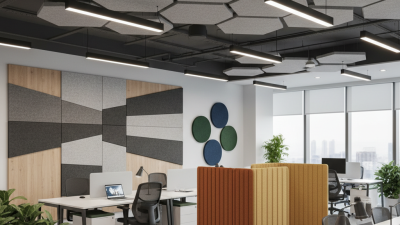

A quiet office is not always a comfortable one. Video calls can sound hollow, keyboard clicks can bounce off hard walls, and a home workspace may share space with family life. Square Acoustic Panels can help reduce reflections, but they do not block every sound or fix every room. That distinction matters when choosing panels for a desk nook, meeting room, or living area. Sound consultant Julian Treasure has said, “We are losing our listening.” His words describe a wider problem: persistent noise can make focused listening harder. They are not a product endorsement, and panel performance still depends on the room.
This guide to the 2026 Best Square Acoustic Panels for Offices and Homes looks beyond color and shape. It considers panel size, core material, thickness, mounting method, and available acoustic test information. It also weighs practical details: whether a panel fits above a monitor, how it looks beside shelving, and whether installation suits a rented home. Small choices matter. A few well-placed panels may soften reflections near a desk, while a large, echoing room may need broader treatment. No single layout works everywhere. That is easy to overlook. The comparisons ahead aim to help readers match product claims with real room needs, while acknowledging that published specifications cannot replace listening in the space itself. A little uncertainty remains; room acoustics are personal, and results can vary.
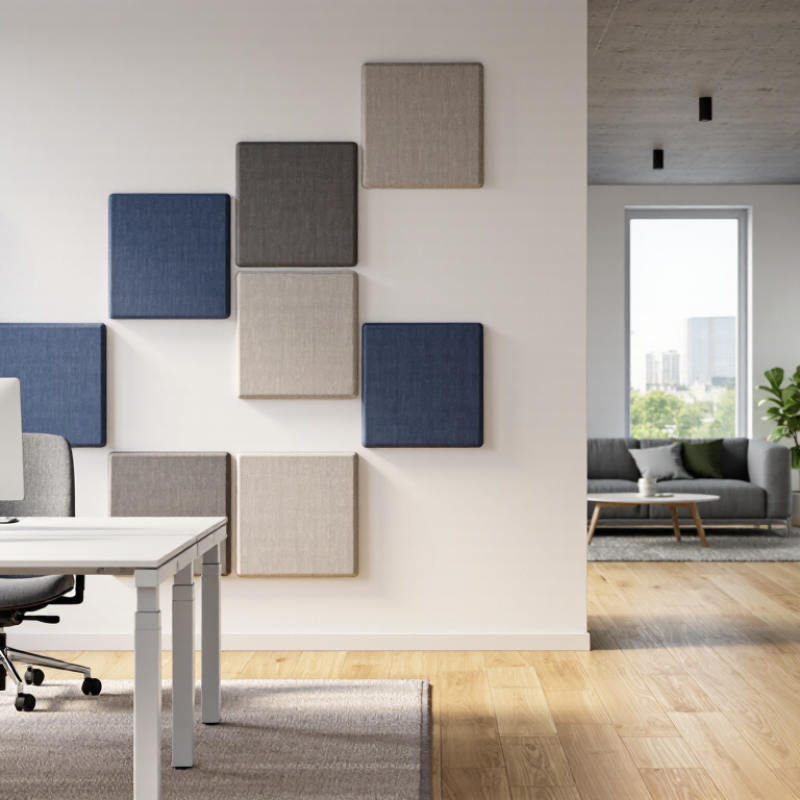
Square acoustic panels are porous absorbers, not soundproof barriers. Their cores—often fiber or foam—let sound enter, where friction converts some sound energy into heat. This reduces reflections and reverberation, so speech can feel clearer across a meeting table. It does not stop all sound passing through a wall.
ASTM International’s C423 test method measures sound absorption in a laboratory. Reports commonly show results by frequency and a Noise Reduction Coefficient (NRC), averaged across 250, 500, 1,000, and 2,000 Hz. An NRC of 0.80 indicates strong average absorption in those test bands; it is not an 80 percent reduction in every room. Low bass may remain. Room size, mounting, and coverage matter.
In a home office, panels near a bare wall behind a desk can soften voice reflections. In a shared office, ceiling panels may help when sound bounces between hard surfaces. Start with the room’s echo, not the panel shape. Still, panels are not magic. Too few may barely change the sound, and covering every wall can make a room feel unnaturally dull. I’d treat lab ratings as a guide, then listen from the actual work area.
Square acoustic panels are sound-absorbing panels commonly mounted on walls or ceilings. Porous panels reduce room reflections by converting some sound energy into heat. The chart shows approximate absorption coefficients for an example 50 mm porous absorber with an air gap; actual performance varies with material, thickness, mounting, and test method.
Square acoustic panels manage reflected sound, not noise passing through walls. Their performance depends on the core, thickness, surface, and mounting method. Porous materials, such as mineral fiber or recycled PET, absorb sound as air moves through them. A fabric face protects the core and affects appearance, but it does not guarantee better absorption. Check test data, including the measurement method and frequency range.
Thickness matters. A thin panel may soften sharp echoes, while a thicker panel or an air gap can improve absorption at lower frequencies.
Not magic. A panel mounted directly on a hard wall will behave differently from one spaced several centimeters away.
In a home office, a few panels near a desk can reduce voice reflections during calls. In a busy shared room, broader coverage may be needed.
Placement matters.
Look for sturdy edges, secure mounting hardware, and a surface that suits the room’s cleaning needs. A tightly woven fabric can collect less visible dust than a textured finish, though it still needs care. Confirm that product test reports match the intended use, and avoid judging performance by appearance alone. I would not assume that a neat grid is the best layout; small shifts around reflective walls or ceilings may work better. A little trial and adjustment can be part of the process.
2026 Best Square Acoustic Panels for Offices and Homes
How to Choose Panels for Offices and Homes
Choose panels for the room’s problem, not just its shape. In an office, speech bouncing between hard walls can make calls tiring. At home, a bare wall behind a desk may add a sharp echo to video meetings. Square panels work best when placed near reflection points, such as the wall beside a monitor or opposite a speaker. Measure the wall first. A neat grid can look good, but too little coverage may barely change the sound.
Check laboratory data before comparing products. ASTM C423 test reports list sound absorption by frequency and often provide an NRC rating. NRC is a rounded average of absorption coefficients at 250, 500, 1,000, and 2,000 Hz; it does not describe performance at every pitch. A panel with an NRC of 0.80 is not a promise of an 80% quieter room. The World Green Building Council’s 2014 Health, Wellbeing & Productivity in Offices report also identifies acoustics as an important part of workplace comfort. Still, each room behaves differently.
Tips: For clearer speech, treat the first-reflection areas and consider a ceiling panel if echoes persist. Compare thickness, mounting method, and fire-test documentation. Keep a small untreated patch, listen, then adjust. I would not assume a higher rating fixes poor placement.
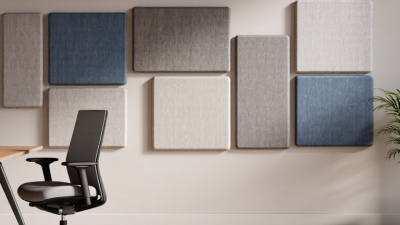
Square acoustic panels differ more in their core and finish than in their shape. Polyester-felt squares are lightweight and easy to arrange in patterns. They suit home offices and rooms where a softer visual finish matters. Their absorption depends on thickness and construction, so appearance alone tells little.
Fabric-wrapped panels with a porous core often absorb a broader range of sound than thin decorative tiles. They can work well in meeting rooms, where speech reflections make voices tiring to follow. Check published test data, such as an absorption rating, and compare panels at similar thicknesses. Foam squares are usually lighter and less costly. They can reduce sharp echoes, but thin foam does little for low-frequency rumble from ventilation or traffic.
Placement matters. In an office, panels near side walls and behind speakers can reduce early reflections. At home, a few squares near a desk or television may make conversation clearer without covering every wall. Not magic. I would avoid choosing by color or price alone; the room’s surfaces, furniture, and noise source all affect results. Measurements help, though a small test area can reveal whether the finish and placement actually suit the space.
| Panel type | Typical square sizes and thickness | Typical sound absorption | Best suited for | Main advantages | Points to consider |
|---|---|---|---|---|---|
| Fabric-wrapped mineral wool or fiberglass | Commonly 12 × 12, 24 × 24, or 24 × 48 in; about 1–2 in thick | Often NRC 0.80–1.05, depending on thickness, core, mounting, and test method | Offices, meeting rooms, home theaters, and rooms with noticeable echo | Broadband absorption; fabric allows a wide range of colors and finishes; thicker panels can improve lower-mid-frequency absorption. | Check the product’s fire and emissions documentation. The fabric surface may need gentle cleaning and protection from moisture. |
| Recycled PET felt | Commonly 12 × 12 or 24 × 24 in; roughly 9–25 mm thick | Product-dependent; thin panels generally absorb less, while thicker panels or an air gap can improve performance. | Home offices, shared workspaces, and decorative wall layouts | Lightweight, available in many colors, and can be cut or shaped for design-focused installations. | Compare tested acoustic data for the exact thickness and mounting method; a thin felt tile is not equivalent to a thick acoustic panel. |
| Open-cell polyurethane acoustic foam | Commonly 12 × 12 or 24 × 24 in; often 1–4 in thick | Varies substantially with thickness, profile, and test conditions; check the individual product’s reported rating. | Small studios, practice rooms, and targeted treatment of reflections | Lightweight and easy to install; wedge and pyramid profiles offer a distinctive studio look. | Foam mainly reduces reflections inside a room; it does not soundproof a wall. Verify fire-performance requirements before use, especially in commercial spaces. |
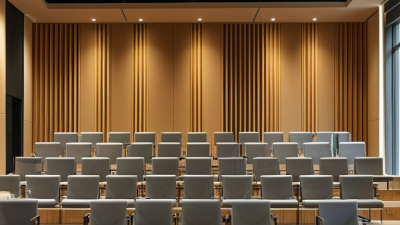
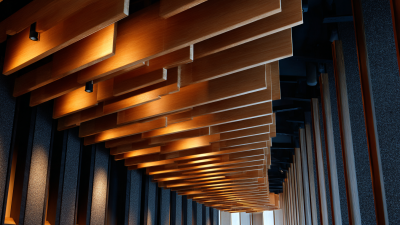
| Wood slat panel with acoustic backing | Square modules commonly around 24 × 24 in; slats are typically mounted over felt or another absorptive backing | Depends on slat spacing, backing, panel thickness, and any cavity behind it; use tested product data. | Reception areas, conference rooms, living rooms, and other design-led interiors | Combines a decorative wood appearance with absorption from the backing; can help balance room acoustics without a fabric-only look. | Performance varies widely between designs. Confirm the complete panel assembly’s acoustic rating, not just the backing material. |
| Perforated wood or MDF panel with absorber backing | Square modules commonly 12 × 12 or 24 × 24 in; thickness varies by construction | Depends on perforation pattern, backing material, and installation depth; check test data for the full assembly. | Boardrooms, home offices, and interiors needing a hard, cleanable-looking face | Durable decorative face; perforations allow sound to reach the absorptive layer behind the panel. | A solid, unperforated panel is primarily reflective. Confirm that the panel is designed and tested as an acoustic absorber. |
Selection note: NRC is a laboratory measure of sound absorption, not sound isolation, and results depend on the tested product and mounting setup. For comparable results, check test data for the exact panel thickness and installation method. Use a mix of wall and ceiling treatment as appropriate for the room, and verify local fire-safety requirements.
Square acoustic panels can soften speech and reduce harsh reflections in offices and living spaces. Start by listening from the main seat. A clap may reveal a sharp echo, but it cannot map every problem. Place panels on the wall where sound reflects between speakers and listeners. In a home office, that often means the wall behind a monitor or opposite a desk. Leave some wall exposed; covering everything is rarely necessary.
Plan the layout with paper templates before drilling. Keep panels level and spaced evenly, while adjusting around lights, shelves, and switches. Use mounting hardware suited to the wall surface and panel weight, and follow the panel maker’s installation guidance. Adhesive may damage paint during removal, so test a discreet area first. I have found that tidy layouts sometimes sound less effective than slightly uneven ones; listening after installation matters more than perfect symmetry.
Tips: Dust panels gently with a soft brush or vacuum attachment on low suction. Keep them away from damp spots and heat sources. Check mounts every few months, especially in busy rooms. If the room still sounds lively, move one panel and listen again before adding more.