How to Choose Stylish Acoustic Panels in 2026?
In 2026, choosing Stylish Acoustic Panels means balancing sound control with the look and feel of a room. A panel should soften harsh reflections without making a space feel flat or over-treated. Sound expert Julian Treasure captures why listening matters: “We need to listen consciously in order to live fully.” His perspective is a useful reminder that acoustics affect everyday comfort, not just technical measurements.
Start with the room’s purpose. A home office may need clearer speech during calls, while a dining room may need less clatter around a hard table. Notice what happens when you speak near a bare wall. Does your voice linger? Do dishes ring across the room? Small observations help identify where treatment may matter most. Still, appearance alone cannot predict performance.
Compare verified absorption data, such as the product’s tested ratings, and check how the panels must be mounted. Fabric, color, edge details, and layout should suit the interior, but confirm cleaning guidance and installation requirements too. A row of warm, felt-covered panels can soften a bright workspace; poorly placed panels may do little. That is easy to overlook.
This guide will help you weigh style, acoustic performance, materials, placement, and budget before buying. It will also point out where product claims deserve a closer look. A beautiful panel can still disappoint. The right choice depends on the room, the sound problem, and realistic expectations—not a trend alone.
What Acoustic Panels Are and How They Improve Interior Spaces
Acoustic panels are surfaces designed to absorb some sound energy inside a room. They often use porous materials, such as mineral fiber or recycled felt, covered with fabric or a decorative finish. Sound enters the surface instead of bouncing as strongly between hard walls. Less echo. Voices can feel clearer, especially in rooms with tile floors, glass, or bare plaster.
Panels do not usually block noise from a neighboring room. That distinction matters. They manage reflections within a space; they are not a substitute for sound insulation. In a home office, a few panels near the speaking area may soften calls. In a dining room, wall panels can reduce the sharp clatter of plates and chairs. The change depends on room size, placement, and how much surface is treated. More panels are not automatically better.
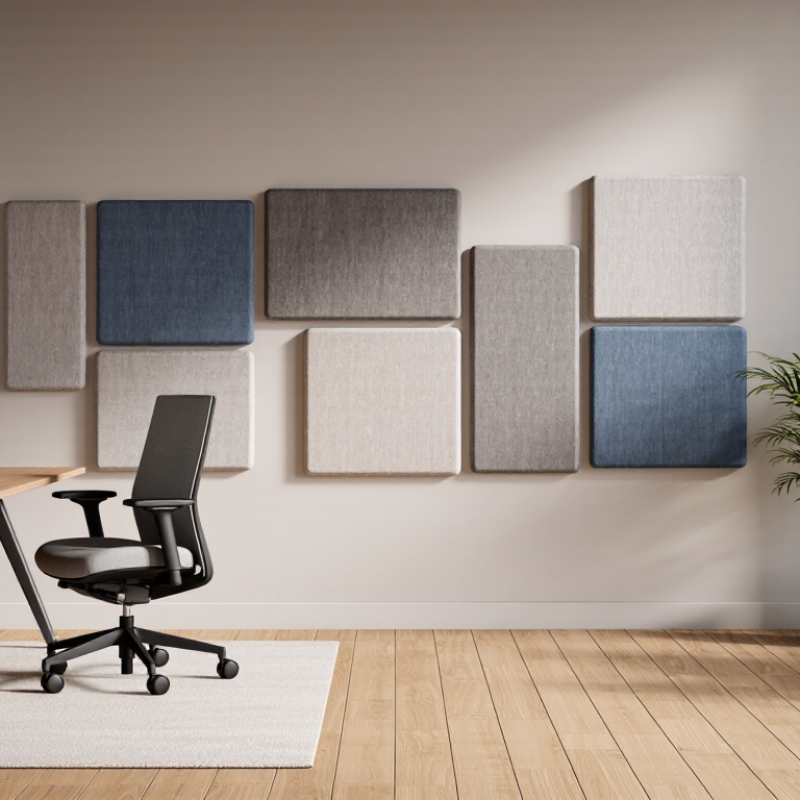
In 2026, acoustic treatment can also contribute to a room’s visual character. Slatted wood, textured fabric, and muted colors can make panels feel like part of the interior rather than equipment. Still, appearance should not be the only test. Check the panel’s stated acoustic performance, material details, and installation requirements. A beautiful panel in the wrong location may do little. It is easy to overlook that. For a small room, testing a modest number of panels before covering an entire wall can reveal what actually helps.
How to Assess Your Room’s Acoustic Needs and Design Style
How to Choose Stylish Acoustic Panels in 2026?
A room’s acoustic needs begin with how it sounds, not how a panel looks. Clap near the center, then listen for a sharp echo or lingering speech. Notice where noise builds: a bare window, tiled floor, or long wall can reflect sound into the room. For a more useful check, record a short voice memo from several spots. It is not a lab test, but it can reveal unevenness.
Room use matters. The ANSI/ASA S12.60 classroom acoustics standard sets a 35 dBA background-noise limit and a 0.6-second reverberation-time limit for smaller core learning spaces.
Those are classroom benchmarks, not universal targets for homes or restaurants. ISO 3382-2 describes methods for measuring reverberation time in ordinary rooms. A qualified acoustics professional can help when speech clarity or noise control is critical.
Then match panel placement and finish to the room’s character: fabric panels can soften a lively dining area, while slatted wood may suit a quiet study. Check the panel’s tested absorption data, not just its thickness.
One imperfect shortcut is choosing a finish from a tiny sample; daylight can change its color dramatically. Try a larger swatch on the wall first.
Which Panel Materials, Shapes, and Finishes Suit Your Space
Start with the room’s needs, not the panel’s color. In a dining nook, speech often sounds harsh near a bare window or painted wall. Fabric-wrapped panels with an absorptive core can soften reflections without changing the room’s layout. PET felt offers a lighter, casual look, while wood slats add texture; their acoustic effect depends on the backing and installation, not appearance alone. Acoustic panels reduce echo, but they do not block all outside noise.
Match the shape to the wall and furniture. Wide rectangles suit long walls behind a sofa, while smaller squares can sit between shelves or above a desk. Hexagons create a more playful pattern, though too many can make a small room feel busy. Wood-slat panels bring strong vertical lines. Check how they relate to door frames, light switches, and the edges of nearby furniture before choosing a layout.
Finish matters in daily use. Matte fabric can hide glare and feel calm in a bedroom; pale felt may keep a dim office from feeling heavy. In a kitchen-adjacent space, consider whether the surface is easy to dust and clean. I would not force perfect symmetry if a radiator or doorway interrupts the wall. A slightly uneven arrangement can look intentional, though it may take a paper mock-up to judge. Test one sample in the actual light.
How to Compare Acoustic Performance, Safety, and Installation
How to Choose Stylish Acoustic Panels in 2026?
Compare tested performance, not just a panel’s thickness or attractive fabric. ASTM C423 laboratory testing reports the Noise Reduction Coefficient (NRC), based on absorption at 250, 500, 1,000, and 2,000 hertz. An NRC of 0.80 suggests stronger average absorption across those frequencies than 0.50. It does not promise equal control of every sound. Low voices, sharp echoes, and bass behave differently. Ask for the full test report and check whether the tested panel matches the product you plan to install. I would not chase the biggest number; it can mislead.
Tips: Sketch your room and mark hard surfaces, such as glass, tile, and bare walls. Compare NRC ratings, panel dimensions, and mounting gaps together. A small test panel can reveal whether the color and texture suit the room.
Safety and installation deserve equal attention. ASTM E84 reports flame-spread and smoke-developed indices; these results help compare materials but do not replace project-specific safety review. Check the panel’s test documentation, backing, adhesive, and mounting method as a complete system. For installation, confirm wall type, panel weight, and required clearances before drilling. Ceiling panels need secure fixings, not guesswork. A neat layout can still leave an echo, and that part is easy to overlook.
How to Choose Panels That Fit Your Budget and Long-Term Needs
How to Choose Stylish Acoustic Panels in 2026?
A good-looking panel should earn its space by improving the room, not merely matching the sofa. Start by identifying the problem: echo, distracting conversation, or outside traffic. Wall panels absorb reflected sound; they generally do not block noise traveling through walls or windows. That distinction can prevent an expensive disappointment. Measure the room, note hard surfaces, and ask suppliers for tested absorption data, such as an NRC rating, rather than relying on fabric samples alone.
Use standards as a guide, not a shopping promise. ANSI/ASA S12.60 sets a 35 dBA background-noise limit and a 0.6-second reverberation-time target for certain smaller classrooms. These are classroom criteria, not universal targets for homes or offices, but they show why placement and room size matter. The World Health Organization’s 2018 environmental-noise guidelines recommend nighttime outdoor noise below 40 dB Lnight to protect health. Panels alone cannot meet that goal when traffic enters through a window.
Plan for the full cost: panels, mounting hardware, installation, cleaning, and replacement. Compare fire-safety documentation and durability, then check whether the finish can be repaired or swapped without replacing the whole unit. A cheaper panel may cost more if its adhesive fails or its color dates quickly. One awkward truth: the most attractive layout may not treat the loudest reflection. Test a small area first, listen from the usual seat, and adjust before ordering more.
How to Choose Stylish Acoustic Panels in 2026: Budget and Long-Term Needs
This chart shows the theoretical quarter-wavelength depth for each frequency, calculated using a sound speed of 343 m/s. It offers a useful reference when comparing panel thickness and budget, but it does not predict a panel’s actual absorption. Check tested acoustic data, mounting requirements, durability, and finish options before choosing panels for long-term use.