How to Choose the Best Acoustic Wall Panels?
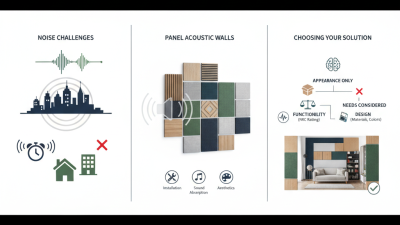
Choosing the best acoustic wall panels begins with a clear question: what should the room sound like? A home office may need less echo during calls, while a dining room may need softer conversation across a hard table. The right Panel Acoustic Wall solution depends on the room, the noise problem, and the surfaces already present. Looks matter, too. But appearance alone cannot predict acoustic performance.
Sound expert Julian Treasure has said, “We are losing our listening.” His observation is a useful reminder that room acoustics shape how well people hear and communicate. When comparing panels, check published absorption data, such as the Noise Reduction Coefficient, and ask how it was measured. A single rating does not describe every frequency or installation. Panel thickness, backing, spacing, and placement can all change the result.
Start with the problem area. A sharp clap that rings near a bare wall suggests reflected sound; a panel placed thoughtfully may help. Measure the wall, note windows and furniture, then compare fabric, wood-slat, and other finishes against your maintenance needs. Check fire and indoor-air documentation from the manufacturer, and confirm the installation method suits your wall. Do not expect panels to block outside noise like a sealed, insulated barrier. That distinction is easy to miss. Sometimes one carefully placed panel helps more than a whole wall covered without a plan. Yet results vary, and a small room can still sound imperfect. A practical choice balances evidence, fit, budget, and the way people actually use the space.
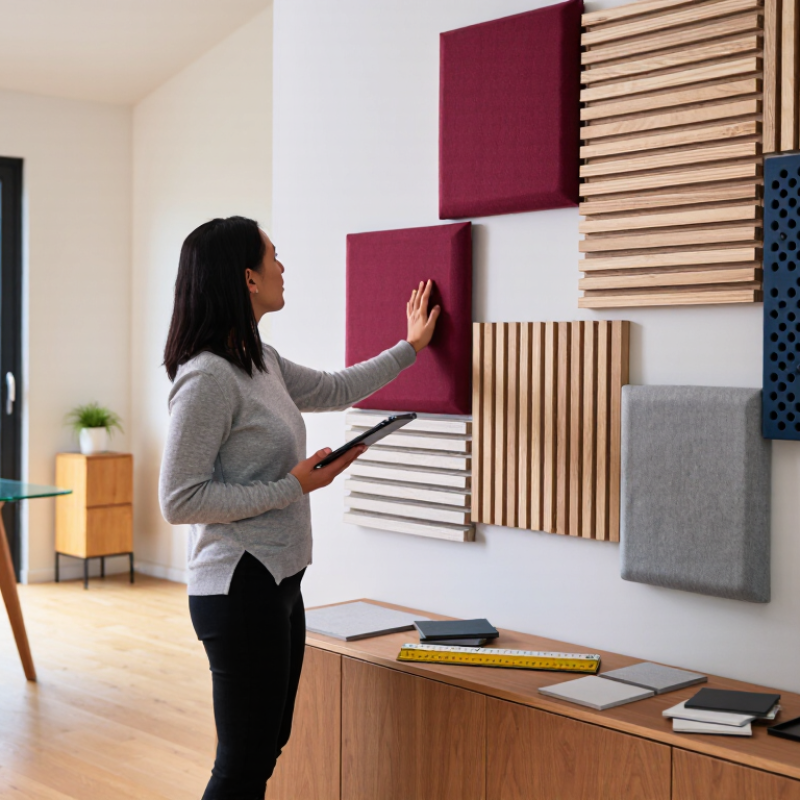
Identify the Acoustic Problems and Goals in Your Space
Before choosing acoustic wall panels, identify what sounds wrong in the room. Does speech feel muddy, or does a hand clap ring for a second? Listen from several spots, including near the back wall and doorway. A phone recording can help reveal harsh echoes, though its microphone may color the sound. Listen closely. Note when the problem occurs: during video calls, music playback, or ordinary conversation. A bare dining room may sound lively at dinner but distracting during a meeting.
Then connect each problem to a practical goal. If voices blur in a home office, you may want less reverberation around the desk. If a podcast recording captures sharp reflections, consider the wall surfaces near the microphone. Mark large areas of glass, tile, and painted drywall; these surfaces often reflect sound strongly. A clap test is useful, but it can mislead, so compare it with normal speech.
Also, wall panels absorb some sound inside a room; they do not reliably stop noise passing through walls. If traffic or a neighbor is the main issue, panels alone may disappoint. Write down your main sound problem, where it occurs, and what improvement would feel noticeable before comparing panel materials or coverage.
Compare Panel Materials, Thicknesses, and Core Construction
Choosing acoustic wall panels starts with identifying the sound you want to control. Panels absorb reflections inside a room; they do not automatically block noise passing through a wall. In a small meeting room, speech may sound clearer after treating the wall behind the speakers, even if hallway noise remains.
Fiberglass and mineral-fiber cores often provide strong absorption, but check the product’s test data and handling requirements. Polyester-fiber panels can be lighter and easier to shape. Foam may suit some spaces, though its performance varies by thickness and surface profile. Material alone is not enough. Compare published absorption results across frequency ranges, not just a single rating.
Thickness affects how much sound a panel absorbs, especially at lower frequencies. A thin panel may soften sharp echoes, while a thicker panel or an air gap behind it can improve low-frequency absorption. Core construction matters too: density, fiber arrangement, and backing all influence performance. There is no universal winner. I would verify the tested assembly matches the planned installation; a gap used in testing may be missing in your room. Test the actual assembly. A small trial area can reveal an unexpected result before you cover an entire wall.
Choose Panel Sizes and Placement for Effective Sound Absorption
How to Choose the Best Acoustic Wall Panels?
Choose panel size according to the room and the sound problem, not just the empty wall. In a small office, a few 60-by-120-centimeter panels can soften reflections near a desk. Larger rooms may need more coverage, especially when hard floors, glass, and bare walls make speech sound sharp. Thicker panels generally absorb more low and mid-frequency sound than thin decorative sheets, though they will not soundproof a room. That distinction is easy to overlook.
Placement matters as much as panel area. Sit or stand where people usually listen, then identify the first reflection points on the side walls. A helper can move a small mirror along each wall; mark spots where the speakers or main sound source become visible. Panels placed there can reduce distracting echoes and improve speech clarity. Leave a little space behind panels when the mounting system allows it. The air gap can improve absorption, particularly at lower frequencies.
Avoid covering every wall by default. Start with a modest, balanced layout, then listen to a familiar recording or record a short voice memo from the room. Add panels where echoes persist. It is not always elegant. Corners may need thicker treatment if bass sounds boomy, while a large bare wall may call for wider panels. Room shape and furnishings change the result, so measurements are a guide, not a promise. A slightly uneven layout can be better than a perfectly symmetrical one.
Balance Cost, Installation Needs, and Long-Term Performance
Choosing acoustic wall panels is less about buying the thickest option and more about matching the room’s needs. Measure the wall area, note hard surfaces, and listen for a sharp echo after a hand clap. That quick test is useful, though it cannot replace a professional acoustic assessment. Small rooms may need less coverage than expected.
Compare installed cost, not just the price per panel. Include mounting hardware, delivery, cutting waste, and labor for uneven walls. Lightweight panels are often easier to install yourself, while heavier systems may need secure fixings and careful layout. DIY saves money. But rushed placement can leave gaps or cover outlets. A test section may look different under evening light, so check it before ordering the full quantity.
For long-term performance, check the core material, fabric durability, cleaning instructions, and resistance to sagging. Panels near desks or doorways may collect dust or take occasional knocks. Choose a finish you can maintain, and confirm that replacement pieces are available if a panel is damaged. Acoustic treatment reduces reflections; it does not block all sound between rooms. That distinction is easy to miss. Leave room in the budget for adjustments.
How to Choose the Best Acoustic Wall Panels?
Balance Cost, Installation Needs, and Long-Term Performance
Representative NRC values vary with panel thickness, backing, mounting, and test method; check the product’s test report rather than relying on material type alone. For a practical choice, compare installed cost and mounting requirements alongside absorption. Fabric-wrapped absorbers often provide strong absorption, while slatted panels can combine absorption with a decorative finish. Consider cleanability, moisture exposure, and replacement needs for long-term performance.