Who Are the Top Panel Acoustic Wall Manufacturers in China?
Choosing a Panel Acoustic Wall manufacturer in China involves more than comparing prices. Each project has different acoustic goals, room dimensions, installation limits, and finish requirements. A conference room may need clear speech, while a studio may require tighter control of reflections. The right supplier should understand these differences and explain how its products fit the intended space.
This guide introduces leading manufacturers and the practical points buyers can use to assess them. Look beyond attractive product photos. Ask about core materials, panel thickness, fabric options, edge details, and documented acoustic test results. Details matter. A sample panel can reveal workmanship, color accuracy, and surface quality that a brochure cannot. Buyers should also check production capacity, customization processes, packaging, delivery planning, and after-sales support. These factors can affect a project as much as the panel itself.
Company rankings can be difficult to compare because suppliers serve different markets and product categories. A large factory is not automatically the best fit for every order. Nor does a polished website prove consistent quality. Request current technical documents, clear quotations, and references relevant to your project, then verify what can be verified. Some specifications may still leave questions unanswered. That is worth noticing, not ignoring. The following overview offers a measured starting point for identifying Chinese manufacturers with suitable products, practical experience, and transparent communication.
What Are Panel Acoustic Walls and How Do They Work?
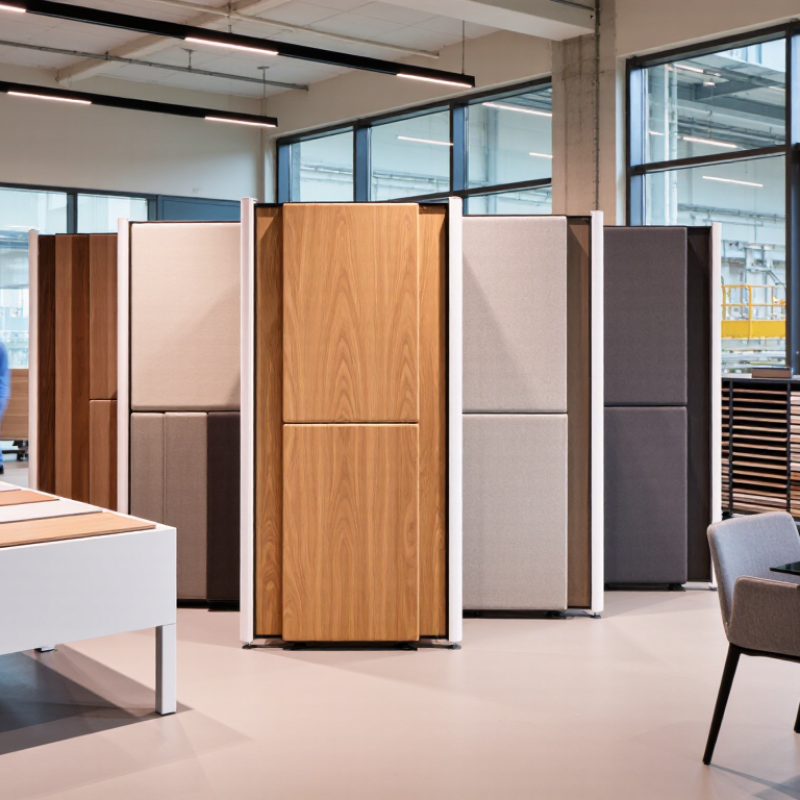
A panel acoustic wall is a surface treatment designed to reduce sound reflections inside a room. It usually combines a porous core, such as mineral fiber or polyester, with a protective fabric facing. When sound reaches the panel, air moves through the porous material. Friction converts some sound energy into small amounts of heat. The room often feels less echoey. Speech can also become easier to understand.
Panels do not block all noise or replace proper sound insulation. They mainly manage reflections within the same space. Placement matters: a few panels near a hard conference-room wall may help, but results depend on room size, ceiling height, furnishings, and panel thickness. A panel is not magic. Even careful plans can miss a reflective corner, so listening after installation is useful.
Tips: Start with the room’s main problem, such as speech echo or harsh sound. Check panel thickness and tested absorption data, not appearance alone. Place panels near strong reflection points, then listen from several seats. Keep access to lights, vents, and safety equipment clear. Measure twice; small layout mistakes happen.
What Types of Acoustic Wall Panels Do Chinese Manufacturers Produce?
Chinese manufacturers produce several acoustic wall panel types, each suited to different rooms. Fabric-wrapped panels use porous cores to absorb reflections in offices, studios, and meeting rooms. Perforated wood and microperforated metal panels combine absorption with a finished architectural surface. PET-felt panels are lightweight and easy to cut into geometric shapes. Foam panels are also available, though appearance and fire-performance requirements may limit where they are appropriate.
Some products address sound inside a room; they do not necessarily stop noise traveling through a wall. For slatted wood systems, the backing layer and air gap affect performance. Perforated gypsum panels often pair with an absorbent cavity, while decorative panels may provide little acoustic benefit without one. ISO 354 measures sound absorption in a reverberation room. Ask for frequency-band test results, not just a single headline rating. Small detail, big difference.
The World Health Organization’s 2018 Environmental Noise Guidelines recommend keeping road-traffic noise below 53 dB Lden outdoors. That is an environmental benchmark, not a promise that wall panels can achieve it. Still, it helps explain why panel choice should follow an acoustic assessment. Catalog claims can look cleaner than real rooms. Check test conditions, panel thickness, mounting method, and the intended frequency range before comparing products.
Acoustic Wall Panels: Common Types and Test Frequencies
Chinese manufacturers offer a range of acoustic wall panel types, including fabric-wrapped mineral-wool or fiberglass panels, PET felt panels, perforated or slatted wood panels, and microperforated metal panels. Their sound-absorption performance depends on the panel construction, thickness, backing, and installation.
The chart shows commonly used octave-band center frequencies for acoustic absorption testing, from 125 Hz to 4,000 Hz. These are test frequencies, not panel performance ratings; actual absorption results vary by product and test setup.
How Are China’s Leading Panel Acoustic Wall Manufacturers Evaluated?
Evaluating China’s panel acoustic wall manufacturers starts with test evidence, not showroom claims. Ask for an independent laboratory report under ASTM C423-23 or ISO 354:2003. ASTM C423 reports absorption by frequency; its NRC averages results at 250, 500, 1,000, and 2,000 Hz, rounded to 0.05. Compare panels with the same thickness, mounting method, and air gap. Otherwise, numbers mislead. A high NRC also does not prove sound insulation between rooms; request transmission-loss or STC data when privacy matters.
Review manufacturing controls too: density tolerances, finish durability, and batch traceability. Ask whether fire and VOC test results apply to the exact panel, coating, and backing being quoted. Small differences matter. Published reports can be outdated, and one sample cannot represent every shipment. Request dated, third-party reports and repeat-test records, then compare them with a project mock-up. Keep one limitation in view: test-room absorption values may not predict performance in a furnished room with windows, doors, and hard floors.
Who Are the Top Panel Acoustic Wall Manufacturers in China?
Identifying the top panel acoustic wall manufacturers in China takes more than comparing attractive catalogs. Buyers should review test reports for sound absorption, fire performance, and dimensional stability. Check that the tested panel matches the quoted core, thickness, and surface finish. Ask for a sample with a cut edge exposed. It can reveal loose fibers, uneven bonding, or a fragile backing. Small details matter.
Factory capability also deserves close attention. A visit, when practical, can show how panels are cut, packed, and checked for defects. Ask how the supplier controls color variation between production batches and handles replacement panels. Request clear installation drawings, because gaps around edges can weaken acoustic results. Good documentation helps. So does a realistic delivery schedule.
There is no single manufacturer that suits every project. Room use, target reverberation, wall conditions, and budget all change the selection. Some suppliers may offer excellent customization but need longer lead times; others may be faster, with fewer finish choices. That trade-off is easy to overlook. Compare evidence, samples, and service terms before treating any company as a top choice.
What Factors Should Buyers Consider When Choosing a Manufacturer?
When comparing panel acoustic wall manufacturers in China, buyers should check measured performance, not rely on product descriptions alone. Ask for the Noise Reduction Coefficient (NRC) or weighted absorption data, plus the complete laboratory report. ISO 354 specifies a reverberation-room method for measuring sound absorption. The report should identify panel thickness, mounting method, and test conditions; these details affect results. That distinction matters. The World Health Organization’s 2018 Environmental Noise Guidelines recommend keeping average road-traffic noise below 53 dB Lden and nighttime noise below 45 dB Lnight. These are outdoor health guidelines, not indoor panel targets, but they underline why buyers should define the room’s actual acoustic problem. Absorbing reflections is not the same as blocking sound between rooms.
Check factory quality controls, material traceability, surface durability, and whether production samples match the tested assembly. Request documentation for emissions and fire performance that fits the project’s specifications. A neat certificate is not enough. Confirm who tested the product and whether the report covers the exact construction being quoted. Also compare lead times, minimum order quantities, packaging, and replacement availability. Ask for a small mock-up in the intended room; fabric color and perforation can look different under site lighting. I would still treat a single test figure cautiously: installation gaps, ceiling height, and furniture can change the result.