

China Top Wood Panel Wall Cladding Manufacturers?
China’s wood manufacturing sector has become an important source for architects, contractors, and international building suppliers. This guide examines China’s top Wood Panel Wall Cladding manufacturers through quality, material sourcing, production capacity, and export experience. It also considers design flexibility, fire performance, moisture resistance, and installation support.
Architect Michael Green, a recognised advocate for modern timber construction, said, “Wood is the only major building material that grows naturally.” His observation remains relevant here. A wall panel is not merely a decorative surface. Its grain, core structure, coating, and fixing system affect the building’s long-term performance. A reliable manufacturer should explain these details clearly.
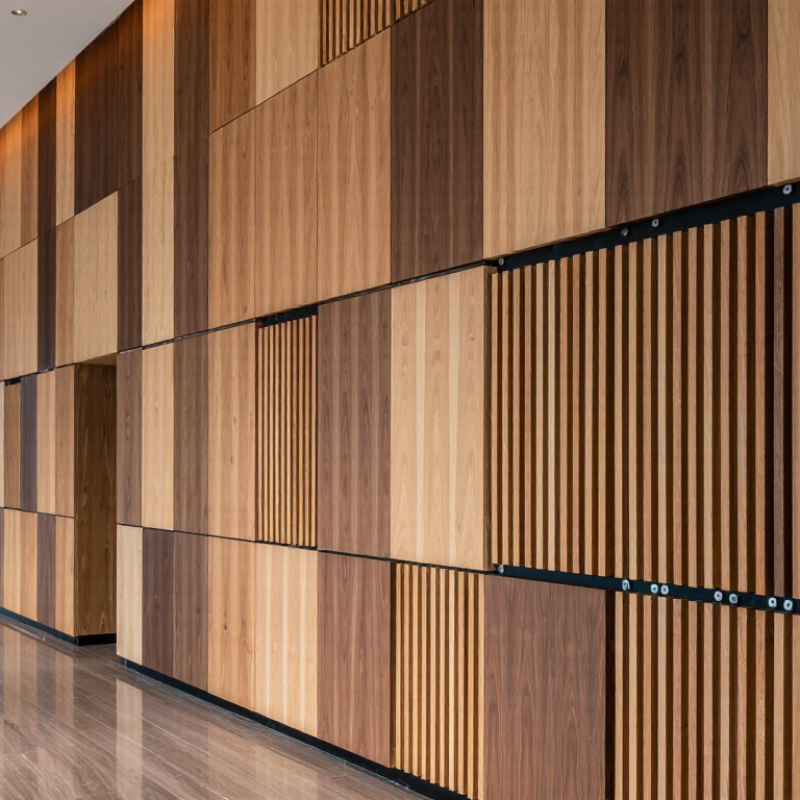
Look beyond polished catalogues. Factory audits, sample testing, and project references often reveal more. Some suppliers offer oak, walnut, bamboo, or engineered veneer finishes. Others produce acoustic slatted panels with concealed clips and black backing felt. These details matter in hotels, offices, restaurants, and residential interiors.
No ranking is permanent. Market data changes. A large factory may still provide weak technical communication, while a smaller specialist may deliver better customization. That is an important limitation. Buyers should verify certificates, moisture content, adhesive safety, production tolerances, packaging methods, and after-sales responsibilities before placing an order.
The following overview highlights manufacturers that demonstrate practical experience, consistent workmanship, and credible support. It does not treat low pricing as proof of value. Good cladding should arrive flat, protected, accurately labelled, and ready for installation. Small details matter.
What Are Wood Panel Wall Claddings?
Wood panel wall cladding is a layered or solid wood-based surface fixed over walls or ceilings. It can cover interior feature walls, ceilings, reception areas, and protected exterior façades. Common formats include veneer-faced plywood, solid slats, acoustic panels, and moisture-resistant fibreboard. Each format changes the wall’s texture, weight, fire behaviour, and maintenance needs. FAOSTAT reported about 379 million cubic metres of wood-based panels produced globally in 2022. That scale explains the wide choice of panel cores and surface finishes available to buyers.
Panels do more than decorate. Their cavities can reduce echo, while timber surfaces add warmth and visual depth. Yet acoustic benefit depends on perforation, backing, air gaps, and room geometry. The USDA Forest Products Laboratory Wood Handbook identifies moisture movement as a central performance issue. Panels expand and contract. Installers therefore need acclimatization, movement joints, correct fasteners, and ventilation behind the lining. For kitchens, bathrooms, or façades, the coating must match exposure conditions. Fire classification also requires project-specific testing, not a casual material claim.
For buyers comparing Chinese manufacturers, request species, core composition, formaldehyde documentation, fire test reports, and chain-of-custody evidence. ISO 38200 provides a recognized framework for tracking wood and wood-based products through supply chains. FAO’s Global Forest Resources Assessment 2020 recorded 4.06 billion hectares of forest worldwide. Responsible sourcing is practical, not decorative. A common site lesson is uncomfortable: attractive panels can fail when moisture control is ignored. Samples can hide warping, uneven colour, or weak edge details. Approve a full-size mock-up.
China Top Wood Panel Wall Cladding Manufacturers? - What Are Wood Panel Wall Claddings?
| Evaluation Dimension | Typical Wood Panel Wall Cladding Information | What to Check with a Chinese Manufacturer | Practical Selection Notes |
|---|---|---|---|
| Product definition | Wood panel wall cladding is a decorative or functional wall-covering system made from solid wood, wood veneer, plywood, fiberboard, or composite wood materials. | Ask for the complete construction, including the core, surface layer, backing, edge treatment, coating, and fixing method. | Do not compare products by appearance alone; panel composition strongly affects stability, emissions, durability, and price. |
| Main panel categories | Common categories include solid-wood boards, veneer-faced plywood, veneer-faced MDF, slatted acoustic panels, fluted panels, 3D grooved panels, and exterior wood siding. | Confirm whether the product is intended for interior dry areas, humid rooms, sheltered exteriors, or fully exposed exterior use. | A panel designed for indoor decoration should not automatically be used outdoors or in wet locations. |
| Common wood species | Frequently specified species and veneers include oak, ash, walnut, pine, cedar, bamboo, and other locally or regionally sourced timbers. | Request the botanical name, veneer thickness, source documentation, and whether the visible layer is natural veneer, reconstituted veneer, or printed décor. | Species influence grain, color, hardness, dimensional movement, availability, and finishing requirements. |
| Typical panel thickness | Interior decorative panels are commonly produced in thicknesses such as 9–25 mm; exact sizes depend on the core, profile, span, and installation system. | Verify finished thickness, thickness tolerance, panel weight, flatness, and whether the quoted dimension includes battens or backing rails. | Thicker panels may improve rigidity, but structural performance must be supported by project-specific testing or engineering data. |
| Typical panel formats | Common formats include rectangular boards, narrow slats, modular tiles, acoustic strips, and custom CNC-cut shapes. Exact dimensions vary by production line. | Confirm maximum production size, joint design, dimensional tolerance, packaging size, and replacement-panel availability. | Modular formats generally simplify installation and replacement, while large panels can reduce visible joints. |
| Core material | Typical cores include plywood, MDF, high-density fiberboard, particleboard, solid timber, and mineral or recycled-content composites. | Request the core density, formaldehyde-emission test, moisture resistance classification, screw-holding information, and adhesive type. | Plywood is often selected for strength and screw holding; MDF is often selected for smooth machining and uniform surfaces. |
| Surface finish | Available finishes may include clear lacquer, oil, stain, paint, UV coating, melamine, laminate, brushed texture, or unfinished natural wood. | Check coating type, gloss level, color consistency, scratch resistance, repair procedure, and suitability for cleaning chemicals. | A factory-applied finish can improve consistency, but color samples should be approved before mass production. |
| Moisture and dimensional stability | Wood naturally expands and contracts with changes in moisture. Engineered panels can reduce movement but are not completely movement-free. | Ask for recommended indoor relative humidity, acclimatization instructions, moisture-resistant core options, and expansion-joint requirements. | Store and install panels in conditions similar to the final space, and allow the product to acclimatize according to the supplier’s instructions. |
| Acoustic performance | Slatted panels with an absorbent backing can help reduce reflected sound and improve room acoustics; decorative solid panels alone generally provide limited absorption. | Request laboratory data such as sound absorption coefficients or an ISO/ASTM test report for the complete wall assembly. | Acoustic performance depends on slat spacing, cavity depth, backing material, wall construction, and installation details. |
| Fire performance | Wood-based cladding is combustible unless treated or incorporated into a tested fire-rated assembly. Fire performance varies by product and installation. | Request the applicable fire classification, test standard, test configuration, treatment certificate, and report for the complete system. | Never rely only on a generic “fire-rated” statement; confirm compliance with the destination country’s building code. |
| Formaldehyde emissions | Composite wood products may emit formaldehyde from resin binders. Emissions depend on the core, adhesive, coating, and manufacturing process. | Request a current third-party emissions report and identify the standard required for the importing market, such as EN 717-1 or relevant North American requirements. | Use project-specific compliance documents rather than relying on unsupported claims such as “eco-friendly” or “zero formaldehyde.” |
| Sustainability documentation | Relevant documentation may include legal timber sourcing, chain-of-custody certification, recycled content, environmental product declarations, and life-cycle information. | Check certificate scope, validity, certificate holder, covered product line, and whether the claim applies to the supplied batch. | Sustainability claims should be supported by verifiable documents and should not be inferred from the word “wood” alone. |
| Installation systems | Common methods include clips, concealed fasteners, screws, adhesive, direct fixing, and installation on timber or metal battens. | Request shop drawings, substrate requirements, fixing spacing, joint details, access requirements, and maximum recommended unsupported span. | The wall substrate must be sound, dry, level, and capable of supporting the combined panel and fixing-system load. |
| Quality-control checks | Important checks include species and color matching, veneer orientation, moisture content, flatness, dimensions, edge quality, coating adhesion, and packaging protection. | Agree on approved samples, inspection criteria, acceptable tolerances, inspection timing, and corrective-action procedures before production. | Pre-production samples and a documented inspection plan reduce disputes over natural grain and color variation. |
| Packaging and logistics | Panels are commonly packed with protective film, corner protection, cartons, pallets, or moisture-resistant wrapping depending on the product and shipping route. | Confirm packaging dimensions, pallet weight, container loading plan, moisture protection, labeling, and replacement policy for transit damage. | Packaging should protect finished surfaces and prevent movement, abrasion, and moisture exposure during transport. |
| Best-use environments | Typical applications include homes, hotels, offices, restaurants, retail interiors, reception areas, feature walls, ceilings, and selected exterior façades. | Confirm the manufacturer’s written suitability statement for temperature, humidity, UV exposure, water contact, cleaning, and maintenance. | For bathrooms, kitchens, saunas, façades, and other demanding areas, choose a product and assembly specifically tested for that environment. |
Related Posts
-
Top Wood Panel Wall Cladding Ideas for Interior Design in 2025
-
Top 5 Wood Panel Wall Cladding Options for Global Buyers?
-
Top Wood Panel Wall Cladding Options for Global Buyers?
-
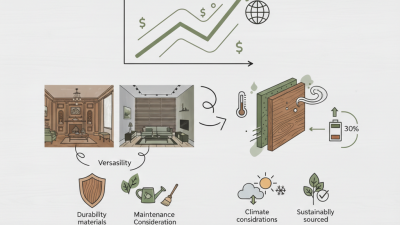
Why Choose Wood Panel Wall Cladding for Your Home?
-
How to Choose the Perfect Wood Panel Wall Cladding for Your Home Decor
-
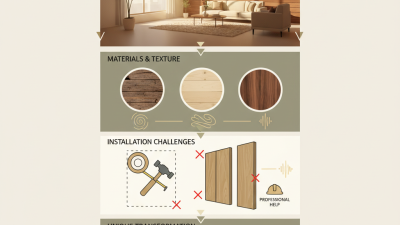
2026 How to Install Wood Panel Wall Cladding for a Stunning Home Transformation?
-

Phone
-

E-mail
-

wechat
wechat

-

whatsapp
whatsapp