Why Choose Curved Wooden Slats for Modern Interiors?
Modern interiors increasingly seek warmth without losing visual discipline. Curved Wooden Slats offer that balance through rhythm, texture, and controlled movement. Their repeated lines can soften a hard ceiling, frame a reception desk, or guide visitors through an open-plan office. The effect is tangible. Light moves across each bend. Shadows change during the day.
This choice also reflects wider construction pressures. UNEP’s 2023 Global Status Report for Buildings and Construction states that buildings consume about 34% of global energy and create approximately 37% of energy and process-related carbon emissions. Material decisions therefore deserve more than visual approval. Wood can support a lower-impact specification when it comes from verified sources, uses durable finishes, and avoids unnecessary replacement. The FAO’s Global Forest Resources Assessment 2020 also highlights the importance of responsible forest management and traceable supply chains. Certification matters here.
Acoustic performance needs equal attention. Slats may reduce sound reflections when paired with an absorptive backing, but their appearance alone proves nothing. Designers should request tested data under relevant standards, such as ISO 354, and review fire, moisture, cleaning, and maintenance requirements. The case is strong, but not absolute. Curves can increase fabrication complexity, installation time, and cost. Poorly resolved joints may collect dust or appear uneven under direct lighting. That weakness deserves honesty. When detailing, sourcing, and testing work together, Curved Wooden Slats become more than decoration. They create a warmer interior with measurable practical value.
Definition and Core Features of Curved Wooden Slats
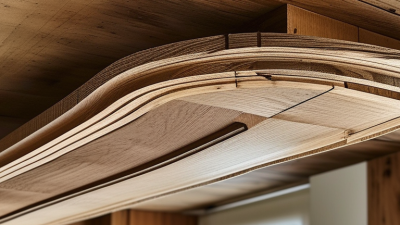
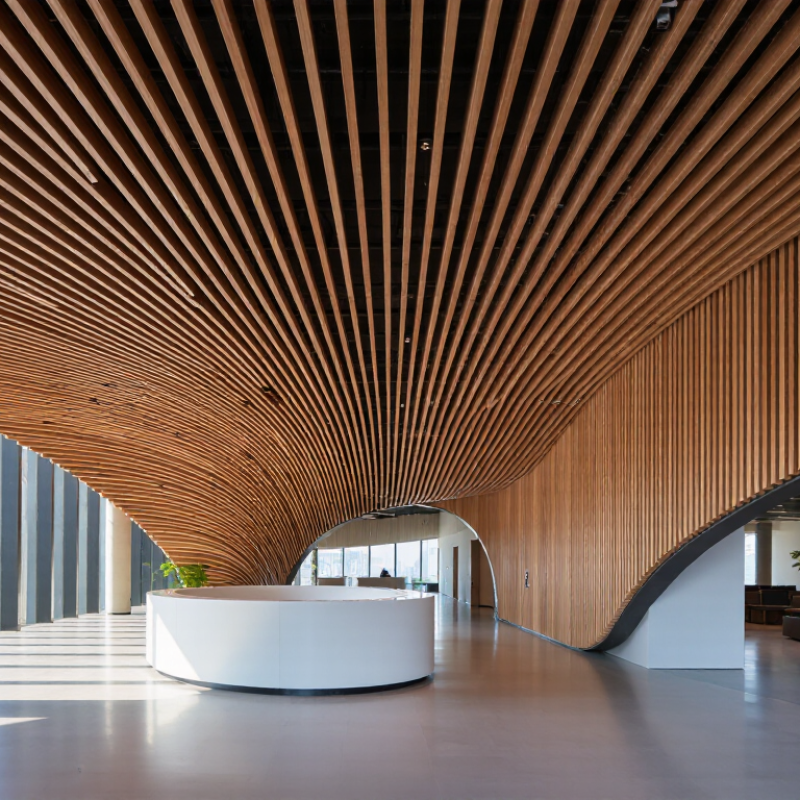
Curved wooden slats are narrow timber strips shaped into a continuous arc or gentle wave. They are installed over a frame, acoustic backing, or structural wall. Their core features include radius, slat width, spacing, wood species, surface finish, and backing material. These details control appearance, touch, durability, and sound behavior. The curve may come from bent wood, layered veneer, or carefully arranged short sections. Each method creates a different visual rhythm.
In practice, curved slats soften hard architectural lines. They can wrap a reception desk, follow a ceiling, or form a warm transition between wall surfaces. Acoustic results require measurement, not guesswork.
ISO 354 evaluates sound absorption in reverberation rooms, while ASTM C423 supports comparable acoustic ratings. Open spacing can expose sound-absorbing felt behind the slats. Tighter spacing usually gives a denser visual effect, but may reduce exposed absorption.
The 2023 Global Status Report for Buildings and Construction states that buildings and construction produced 37% of global energy and process-related carbon dioxide emissions in 2022.
Material choices deserve scrutiny.
Wood is not automatically sustainable. The FAO Global Forest Resources Assessment 2020 recorded about 4.06 billion hectares of forest worldwide, or 31% of global land area. Responsible sourcing, efficient cutting, low-emission finishes, and durable installation matter.
A curved panel should also allow cleaning and repair. Dust gathers along inner radii. Small detail, often missed.
Designers should request documented wood origin, finish specifications, and tested acoustic data. A beautiful curve can still fail when its backing, joints, or maintenance plan remains unclear.
How Curved Wooden Slats Enhance Modern Interior Design
Curved wooden slats do more than decorate a modern room.
They shape how people see, hear, and move through it. Their gentle rhythm softens hard surfaces, while natural grain prevents minimalist spaces from feeling cold. In a living room, slats can frame a television wall, conceal storage, or guide attention toward a window. The curve matters.
Unlike flat panels, curved slats create changing shadows as daylight travels across the wall. This movement gives a quiet sense of depth without adding heavy furniture. Acoustically, closely spaced wood elements can help scatter sound, especially when installed over suitable acoustic backing.
They do not make a room silent.
That distinction matters.
Designers should examine spacing, radius, moisture exposure, and fixing methods before installation. A tight curve may look elegant, yet it can complicate cutting and create visible tension in the material.
I have found that strong results come from matching slat direction to the room’s architecture. Vertical curves can make a low ceiling feel taller, while horizontal lines may widen a narrow passage. Warm-toned wood often suits concrete, stone, and painted plaster, but excessive contrast can dominate the space.
Less can be stronger.
Maintenance also deserves attention: dust settles on ledges, and uneven curves may require careful cleaning. A thoughtful design accepts these practical limits instead of treating wood as a flawless surface.
Material Options, Construction Methods, and Surface Finishes
Why Choose Curved Wooden Slats for Modern Interiors?
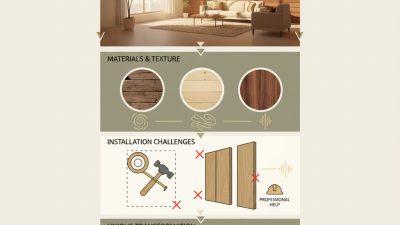
Material selection shapes both appearance and long-term performance. Solid timber offers visible grain, natural depth, and a warm touch. However, wide solid pieces may move with humidity changes. Veneered plywood and engineered wood provide better dimensional stability for sweeping curves. Bamboo can offer a consistent texture, but its tone may feel less traditional. Always inspect samples in the actual room. Small differences matter.
Construction methods determine how smoothly the slats follow a radius. Laminated strips create strong, controlled bends with fewer surface cracks. Kerf-cut panels bend efficiently, although their grooves may weaken the structure. A flexible backing can maintain even spacing and simplify installation. Skilled installers should allow expansion gaps near walls and ceilings. Measure twice. Curves expose mistakes quickly.
Surface finishes affect touch, color, cleaning, and light reflection. A matte water-based coating keeps the grain visible and reduces strong glare. Oil finishes deepen the color, but they usually need more regular maintenance. Stained surfaces can unify mixed wood tones, though excessive staining may hide useful grain variation. Test the finish on a curved sample, not only a flat board. Check how shadows move across the slats during daylight and evening lighting. A small uneven tone is often acceptable. Still, inconsistent spacing or rough edges deserves correction. For public interiors, confirm the selected finish and backing meet the project’s performance requirements.
Why Choose Curved Wooden Slats for Modern Interiors?
Material options, construction methods, and surface finishes for lightweight, warm, and visually continuous interior features.
Material options
Solid wood offers natural grain, veneer-laminated slats provide stable curved forms, and flexible plywood or MDF can support efficient repeat production.
Construction methods
Common approaches include steam bending, kerf cutting, and laminating thin wood layers over a curved former. Laminated construction generally improves dimensional stability.
Surface finishes
Clear lacquer preserves the visual character of wood, hardwax oil creates a natural low-sheen appearance, while pigmented finishes provide stronger color control.
The chart uses representative midpoint densities from commonly published ranges for wood and wood-based panel materials. Actual values vary with species, moisture content, and manufacturing grade.
Key Benefits for Acoustics, Lighting, and Spatial Comfort
Why Choose Curved Wooden Slats for Modern Interiors?
Curved wooden slats bring softness to rooms dominated by straight walls and hard surfaces. In my interior projects, they have helped reduce sharp echoes in dining areas, corridors, and compact living spaces. The slats do not make a room soundproof. However, their spacing and curved profile can scatter sound, making conversations feel less harsh. A backing layer can improve acoustic performance when the wall construction allows it.
Lighting changes noticeably across the curved surface. Narrow gaps create moving bands of shadow as daylight shifts during the afternoon. Warm artificial lighting can highlight the grain without making the wall feel overly bright. This layered effect gives depth to small rooms. It also supports visual comfort by preventing one flat, glaring surface. Yet, poorly positioned lights may exaggerate dust or uneven finishes. That detail is easy to overlook.
Tips: Test a small sample beside your actual flooring and lighting. Keep slat spacing consistent, but do not chase visual perfection too aggressively. Natural wood varies. Use curved sections near seating zones, entrances, or ceilings to guide movement gently. For better acoustics, combine the slats with absorbent material behind them. Leave enough clearance for cleaning and maintenance. A beautiful installation can still become inconvenient when dust gathers in unreachable gaps.
Practical Considerations for Selection, Installation, and Maintenance
Curved wooden slats bring warmth and movement to modern interiors, but their shape demands careful planning. Selection should begin with the room’s humidity, lighting, and wall dimensions. In a damp area, choose stable wood and confirm its moisture tolerance. Grain direction also matters because it affects bending, appearance, and long-term stability. Request a physical sample before ordering. Digital images can hide uneven color and surface texture.
Installation requires a flat, strong substrate and accurate measurements. Mark the curve with a full-size template, not only a short ruler. Leave small expansion gaps where the wood meets walls or ceilings. Concealed fixings usually create a cleaner appearance, but they must suit the wall structure. Do not force a slat into position. That pressure may create cracks that appear months later.
Measure twice. Cut once.
Maintenance is simple, though not effortless. Remove dust with a soft, dry cloth and clean spills quickly with a lightly damp cloth. Avoid excessive water and harsh chemicals, which can dull the finish. Keep indoor humidity reasonably stable, especially near heating systems or sunny windows. Inspect joints and fixings twice a year. I once underestimated afternoon sunlight in a sample room; the color changed more quickly than expected. A small test area and seasonal review would have prevented that oversight.