What Are Acoustic Partition Panels and How Do They Work?
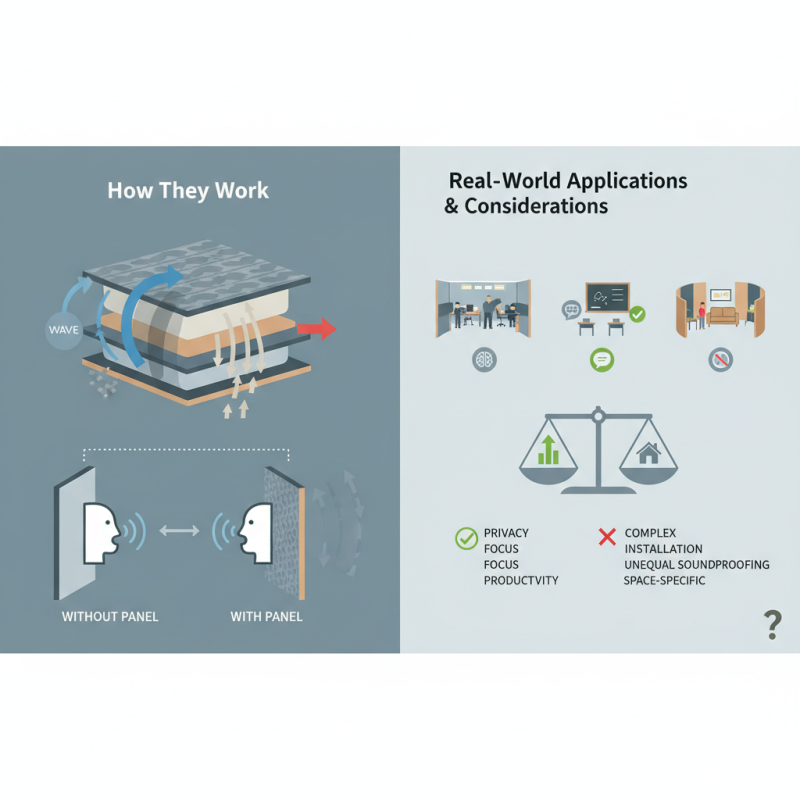
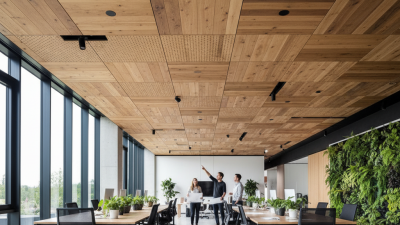
Acoustic Partition Panels are innovative solutions for noise control in various environments. These panels reduce sound transmission between rooms. They are especially useful in offices, schools, and homes. In an era where privacy and focus matter, these panels prove their value.
Imagine a bustling office filled with chatter. Workers often struggle to concentrate. Acoustic Partition Panels create distinct spaces that enhance productivity. They trap sound waves and limit noise interference. This leads to a quieter, more efficient working atmosphere.
However, these panels are not a one-size-fits-all solution. Installation can be challenging and may not always meet expectations. Users may find uneven soundproofing if not properly placed. It's crucial to consider the specific acoustics of the space. Acoustic Partition Panels can be the answer, but understanding their limitations is essential.
What Are Acoustic Partition Panels?
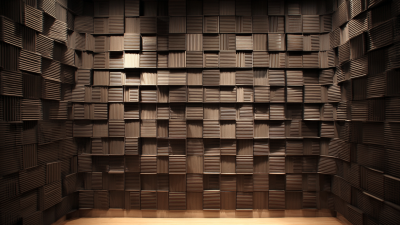
Acoustic partition panels are specialized wall structures designed to absorb sound. They create quieter environments in offices and homes. These panels minimize sound transmission between spaces, promoting better privacy and focus. By using materials that dampen vibrations, they effectively reduce noise levels.
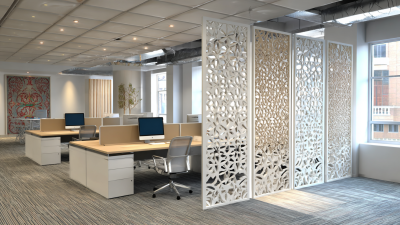
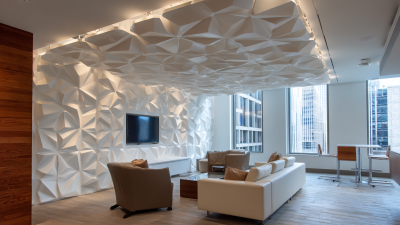
The design of these panels can vary widely. Some are fabric-covered, while others may be made from rigid materials. The visual appeal is crucial; many people want them to blend in with their decor. However, the challenge lies in choosing the right type for specific needs. One may not realize the difference between a traditional wall and an acoustic panel until they experience the sound reduction firsthand.
Application is also complex. Not all areas require the same level of soundproofing. Spaces like conference rooms may need more absorption than open-plan offices. It’s easy to overspend on features that don't always deliver noticeable results. Careful planning is necessary to determine the most effective placement of these panels. Even then, results may vary based on room layout and design, leading to some surprises.
Acoustic Partition Panels: Sound Absorption by Frequency
Acoustic partition panels are designed to reduce sound transmission between spaces. The chart above illustrates the sound absorption coefficients of these panels across various frequency levels, indicating their effectiveness in controlling noise in different environments.
The Materials Used in Acoustic Partition Panels
Acoustic partition panels play a crucial role in sound management within various environments. These panels are made from materials that absorb sound waves. Common materials include fiberglass, mineral wool, and foam. Each material has unique properties that contribute to sound insulation and noise control. For example, fiberglass panels are effective in reducing mid to high-frequency noise. They can achieve a Noise Reduction Coefficient (NRC) rating of up to 1.0, meaning they absorb almost all sound in a room.
Mineral wool panels are also popular for their acoustic properties. They’re often used in office spaces and auditoriums. In terms of absorption, they can reduce sound levels significantly, potentially improving speech clarity in meetings. Meanwhile, foam panels are lightweight and easy to install. They are often used in recording studios for their ability to dampen sound.
Tips: When selecting materials for acoustic panels, consider the environment. Dense materials may work better in larger spaces with high ceilings. However, lighter materials could be more suitable for smaller or home offices. Always think about the intended use of the space. Sometimes, a mix of different materials will yield better results. Evaluate what works best in your situation before making a decision.
How Acoustic Partition Panels Improve Sound Quality
Acoustic partition panels are essential for creating quiet, focused environments. These panels play a significant role in controlling sound quality by absorbing and diffusing noise. According to a study by the National Institute of Standards and Technology (NIST), the proper use of acoustic panels can reduce sound levels by up to 30%. This reduction is crucial in offices, schools, and other spaces where clear communication is vital.
These panels work by minimizing sound reflections. They come in various materials, such as fabric, foam, or wood. When sound waves hit these surfaces, they are absorbed rather than bouncing back into the space. A report by the Acoustical Society of America highlights that implementing acoustic panels can lead to an improvement in speech intelligibility by about 50%. This improvement is particularly valuable in busy environments, where distractions can hinder performance.
However, not all panels are created equal. The effectiveness of acoustic panels can be influenced by placement and material choice. If panels are spaced too far apart, they may not provide the intended sound reduction. Similarly, using low-quality materials can diminish their sound-absorbing capabilities. Careful consideration is essential when selecting and installing acoustic panels to maximize their potential benefits.
What Are Acoustic Partition Panels and How Do They Work? - How Acoustic Partition Panels Improve Sound Quality
| Panel Type |
Material |
Thickness (mm) |
Sound Absorption Coefficient |
Usage Areas |
| Fiberglass Panels |
Fiberglass |
50 |
0.90 |
Recording Studios |
| Foam Panels |
Acoustic Foam |
25 |
0.70 |
Home Theaters |
| Mineral Wool Panels |
Mineral Wool |
50 |
0.95 |
Offices |
| Fabric-Wrapped Panels |
Wood Fiber |
20 |
0.85 |
Conference Rooms |
| Hanging Baffles |
Recycled Cotton |
100 |
0.80 |
Large Spaces |
The Installation Process of Acoustic Partition Panels
Installing acoustic partition panels can greatly improve sound management in a space. These panels help reduce noise levels and enhance privacy. The installation process can be straightforward, but it requires attention to detail.
Begin by measuring the area where the panels will be installed. Ensure accurate measurements to avoid potential issues later on. Cut the panels to fit your space, if necessary. Use a level to check that they are straight. This simple step is crucial; unlevel panels can create gaps and affect sound absorption.
**Tips:** Take your time during installation. Rushing can lead to mistakes. Consider having a second person help you hold the panels in place. Proper placement is essential. After attaching the panels, check for any loose edges.
Use adhesive or screws to secure the panels firmly. Make sure to follow the manufacturer’s guidelines for the best results. Keep in mind that fitting the panels perfectly may require some adjustments. It's normal to have a few initial challenges. Don't hesitate to step back and reevaluate your progress as you work.
Common Applications for Acoustic Partition Panels
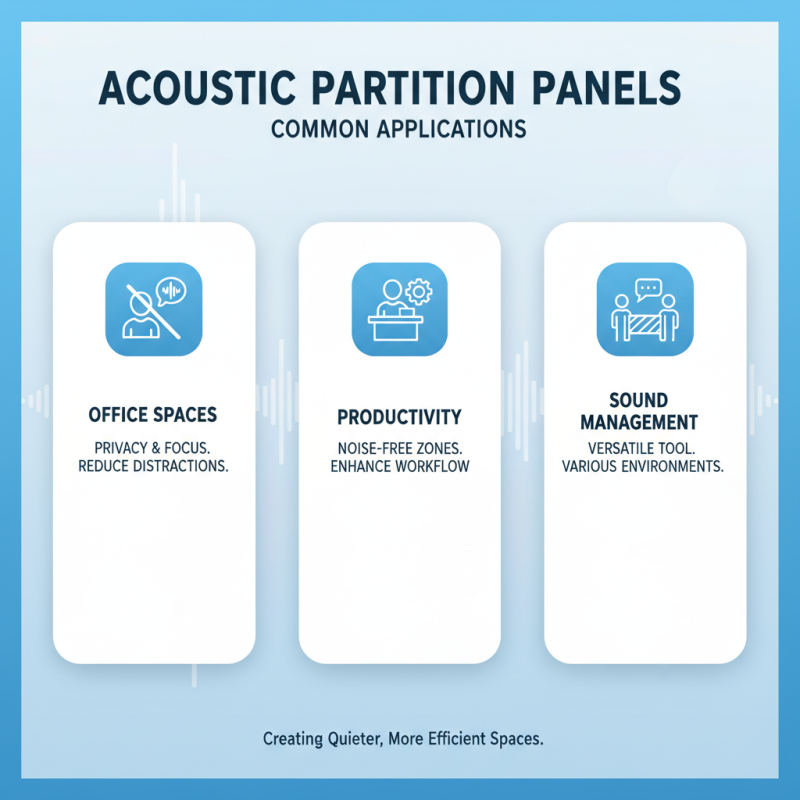
Acoustic partition panels are versatile tools in sound management. They play a crucial role in various environments. Their primary application lies in office spaces. Often, they create privacy for employees. This promotes focus and reduces distractions. A noise-free zone enhances productivity.
These panels also find use in educational institutions. Classrooms benefit from reduced noise levels. Students concentrate better in a quiet setting. Moreover, they can transform community spaces. Libraries and meeting rooms become more functional. When noise is controlled, communication improves. However, not every panel achieves the desired effect. Some users may find the installation challenging.
In entertainment venues, acoustic panels are indispensable. They help to balance sound in theaters or concert halls. Without proper acoustics, performances suffer. Audiences notice imperfections in sound clarity. It's essential to assess the panel's effectiveness frequently. Understanding their limitations is key to optimizing their use. There’s always room for improvement on how they are implemented.